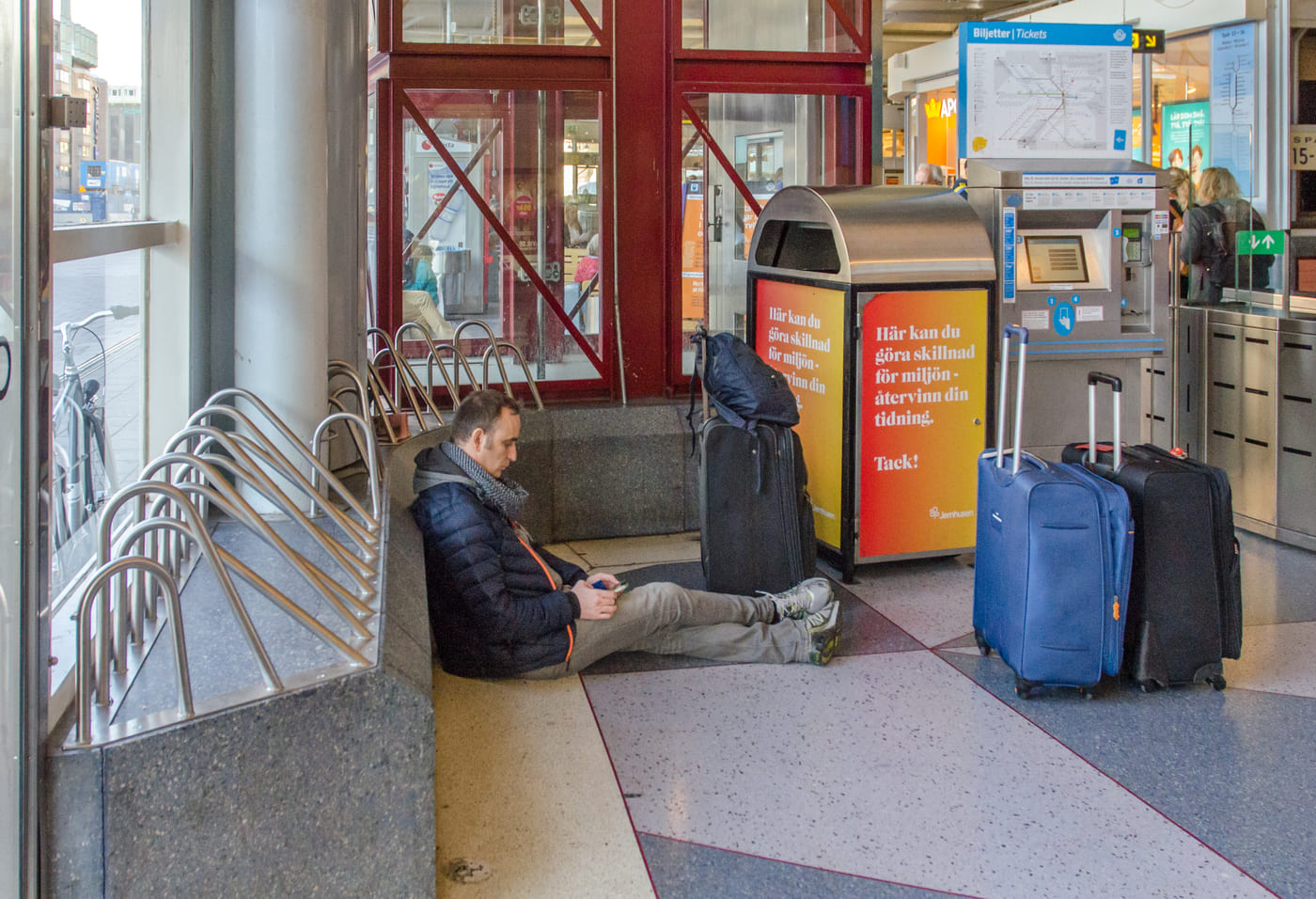
Credit: Edward Middleton, CC BY-SA 4.0, via Wikimedia Commons
In 2025, living without internet access is increasingly like trying to live without electricity. The internet has evolved from a luxury to a necessity. It’s now a fundamental tool for education, healthcare, employment, and social participation. The COVID-19 pandemic only accelerated this shift. Suddenly, being online wasn’t just convenient. Internet access has become a pressing human rights issue, especially with millions still offline.
Disconnected and Disadvantaged
South Africa currently has about 50.8 million internet users (roughly 79% of the population), which means South Africa has one of the highest internet penetration rates of developing countries. This sounds like a promising step towards full connectivity, but it still leaves over 13 million South Africans offline. The narrative of “connectivity” often focuses on urban areas, leaving rural communities behind. For example, in provinces like Limpopo, only about 1.7% of rural households have reliable internet access.
A study in Mankweng Township illustrates how the digital divide affects workers. Access to the internet is now required for job applications, training, and work-related communication, but only 20% of Mankweng Township participants had home internet, with high data costs being the main barrier to connectivity. Of those participants who were employed, 70% reported that poor connectivity and the high cost of connectivity actively hindered their professional growth and advancement in their careers.

Credit: The World Bank via Statista
Internet: A Force for Harm and Good
Access to the internet is not just a technological issue; it’s also an issue of inclusion and equity. The exclusion of seniors, who are often less technologically advanced, is a prime example. Their struggle to keep up with the digital world affects their cybersecurity and even their access to online healthcare. The same applies to many people in underserved areas. The result is that they feel alienated and left behind.
In addition, as shown by a study on northern Ghana, limited internet access makes citizens more vulnerable to misinformation as it spreads quickly through traditional and pavement media (informal word-of-mouth communication by way of local gatherings). Without the ability to fact-check, people become more susceptible to false narratives, limiting their ability to make informed decisions.
South Africa’s Commitment to Connectivity
Over the past decade, South Africa has made significant progress toward becoming a more connected society. Government initiatives, such as the South Africa Connect policy and regulatory efforts by the Independent Communications Authority of South Africa (ICASA), aim to expand affordable, quality internet access, particularly in disadvantaged areas. Each year on December 10th, the country celebrates Human Rights Day by highlighting programs promoting digital inclusivity, especially targeting marginalised communities. Tackling both the technological and social barriers to internet access is crucial for true inclusivity. These programs emphasise the right to connectivity as part of broader human rights, which in turn fosters social cohesion and economic empowerment.
There is a growing debate about whether internet access should be classified as a basic human right. I believe that it absolutely should be. When we look at the human rights laws that govern countries across the globe, they assert that all people have the right to food, education, work, health, and liberty. Now that the internet is what provides access to these rights, it is clear to see that it should undoubtedly be classified as a human right in itself.

This article was written by a guest contributor, T. Chirambo.

If you are interested in diversity after reading this article, our program may be of use to you. Find more details here!