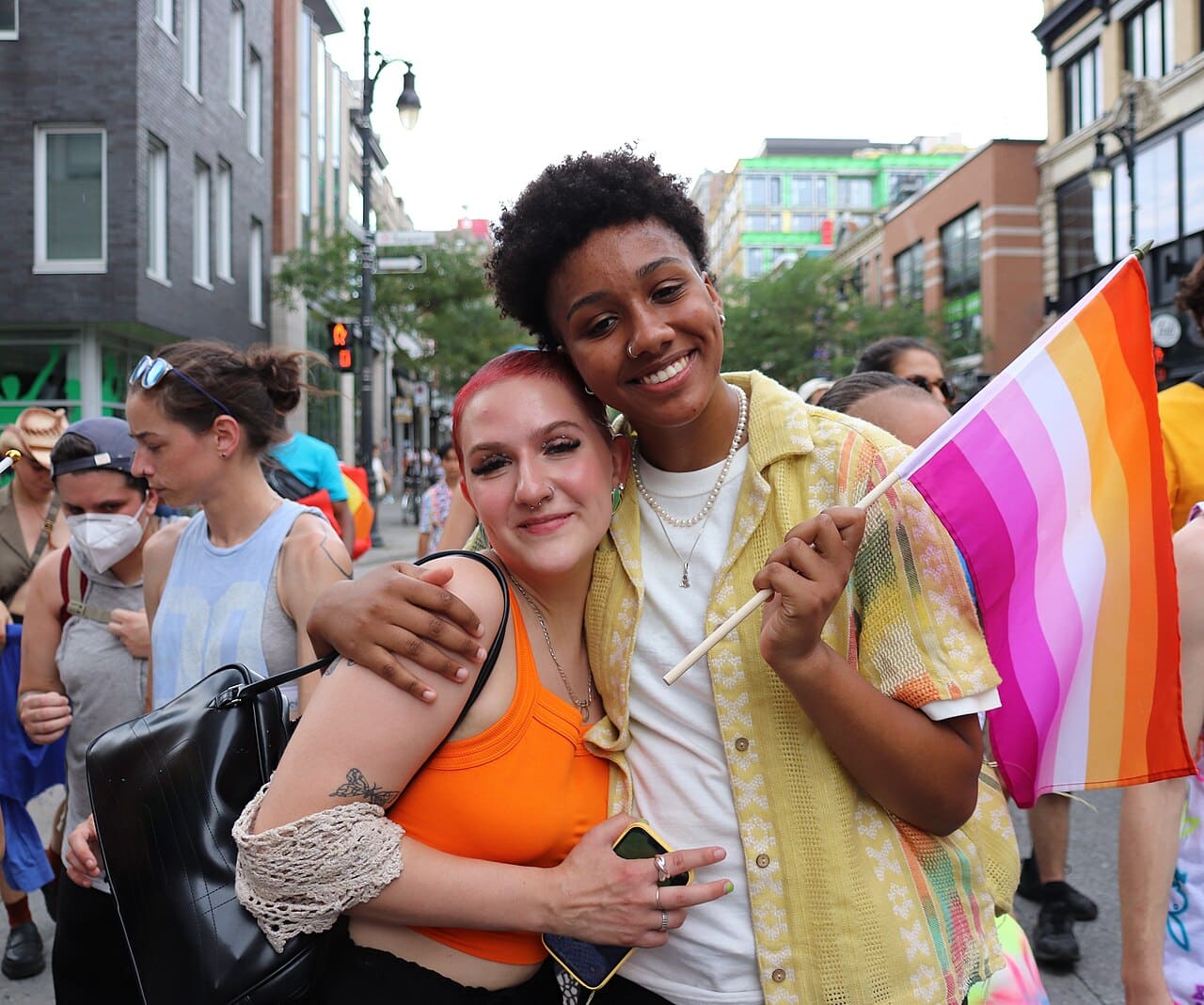
Credit: Ted Eytan, CC BY-SA 2.0, via Wikimedia Commons
Gender segregation is embedded in everyday life. People are routinely separated into male and female categories to access toilets, changing rooms, and gendered services. This separation is usually justified on the grounds of privacy, dignity, and safety. Women-only spaces can feel like a basic layer of safety and control, especially for those who have been victims of sexual violence. Those who have experienced gender-based traumas may understandably react strongly when they feel their boundaries are crossed. However, when the focus shifts away from safety and privacy towards who “counts” as a woman, the debate becomes muddled.
No Solidarity: One Marginalized Group Targeting Another
TERFs (trans-exclusionary radical feminists) are often at the heart of such debates. TERF ideology frames trans women as illegitimate women, as trespassers in women’s spaces. Trans-exclusionary views are not confined to one demographic and are, unfortunately, even held by other members of the LGBTQ+ community. Recently, political projects have emerged from that ideology, aiming to redefine womanhood in strictly biological terms and exclude trans women from legal protections and public life.
On April 16, 2025, the UK Supreme Court ruled that “sex” in the Equality Act should be interpreted as sex assigned at birth. The US uses different legal language within a state-by-state patchwork of policies, but its “bathroom bills” also segregate facilities by sex assigned at birth. These approaches have immediate implications for trans women and trans men, but it also raises broader problems for intersex people and others whose bodies do not fit neatly into a system built around two sexes.

U.S. State Bathroom Bans (Dark Red: All Govt Buildings / Red: Schools + Some Govt / Orange: Schools Only / Gray: No Ban / Red caution: Criminal Penalties / Yellow caution: Restrictive Sex Definitions)
Credit: Equality Maps: Bans on Transgender People’s Use of Public Bathrooms & Facilities According to Their Gender Identity, via LGBTmap.org
Conflicting Understandings of Identity
A central disagreement is the distinction between sex and gender. Sex generally refers to the biological classification assigned based on reproductive anatomy at birth. Gender encompasses identity and social meaning, which is shaped by culture, norms, and expectations, not only biology. Gender is how someone understands and expresses themself, and how they are understood by others in society. This distinction matters because facilities are often segregated by sex, while enforcement is based on gender presentation. In other words, people are rarely challenged because of documented biology; they are challenged because someone thinks they look like they do not belong.
As a result, when transgender people attempt to follow the law by using the facilities of their sex assigned at birth, they are vulnerable to “bathroom policing”. These laws require transgender men to use the women’s bathroom and transgender women to use the men’s bathroom, leading to reports of transgender people being denied access and experiencing verbal harassment and physical and sexual assault. Gender-nonconforming cis people, including cis women who are not conventionally feminine, have also been targeted.
The Politics of Deciding Who is “Deserving” of Safety
If safety is the justification for strict segregation, we must ask: safety for whom? These segregation policies have only increased confrontation and anxiety. If the stated aim is privacy and dignity, it is difficult to defend an approach that tries to achieve it through invasive questioning and suspicion.
Even if someone supports sex-segregated spaces in principle, it is still worth asking whether these spaces actually make anyone safer. Rather than policing individuals and turning bathrooms into identity checkpoints, safety should be improved through design. Better cubicles and locks, floor-to-ceiling stalls, and more single-occupancy facilities could create options that allow everyone to feel more secure without infringing on the dignity and rights of others. However, when we only see more policing of appearance, more harassment of minorities, and more confrontation, the “safety” argument collapses under its own weight.

Credit: Gabriel Dalton via Unsplash
This article was written by a guest contributor, K. Kanli.

Stay connected on your DEI journey with Learning Cycle. Explore our workshops and success stories to empower your team.