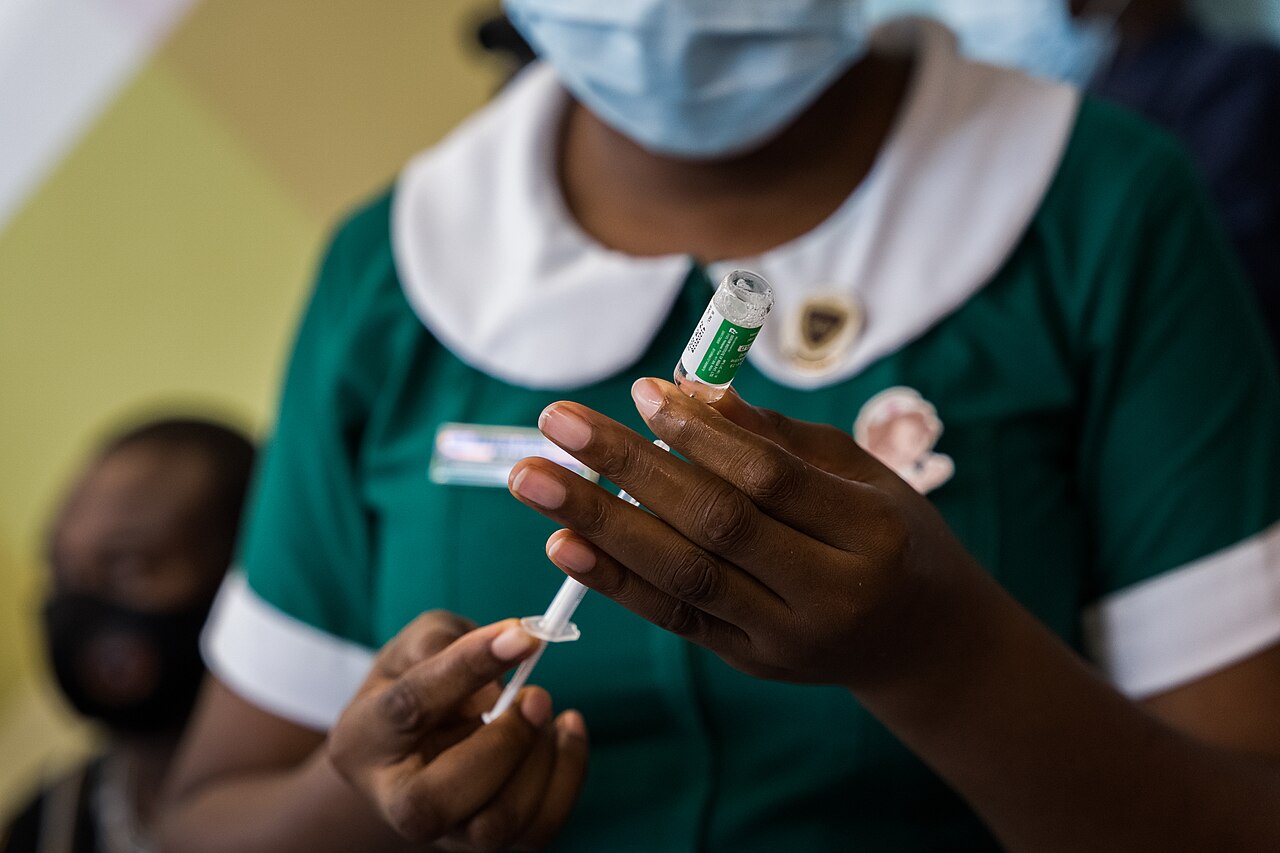
Credit: World Health Organization, CC BY-SA 3.0 IGO, via Wikimedia Commons
Early this year, the United States signed approximately 20 bilateral health agreements with various African countries. Under the America First Global Health Strategy, the US commits to providing financial support to these countries for a specified time period in order to boost that country’s financial standing, strengthen health systems, and ultimately prevent epidemiological threats from entering the United States. In recent years, China has also greatly boosted the amount of investment in and aid provided to African countries as it aims to build greater influence in the region.
Aid as a Trojan Horse
While this may seem like generosity, the agreements solicited in return for them are a blatant abuse of power. The thorough surveillance, long-term health data, and resources that the US is demanding in return are a reckless exploitation of countries less able to protect themselves. The truth is, Africa does not need saving, especially when this saving is at the expense of the population’s health and right to information security.
The “aid” countries like the US and China are often so eager to provide has less to do with protecting Africa than it does with exploiting African resources. In this case, like many others, the US maintains the right to withdraw from programs that do not align with its interests at any given time. Foreign aid like this creates a high risk of dependency that can be catastrophic, but this is not accidental. It is a way of shifting power in the direction of the provider. An example is the projected impact of the cessation of aid to South Africa by the President’s Emergency Plan for AIDS Relief (PEPFAR). If PEPFAR-funded programs in South Africa were to be discontinued without replacement, there is projected to be a 29-56% increase in HIV infections and 33-38% AIDS-related fatalities between 2025 and 2028.
Artificially Imposed Healthcare Disparities
It is no secret that unequal health access disproportionately affects people of colour. Many medical treatments were first tested on African populations, but those treatments have since been denied to these very populations. Additionally, Western companies collect genetic data from African populations for research, only to sell the resulting treatments back to them at prices they can’t afford or at a lower quality. More recently, during the COVID-19 pandemic, the World Health Organisation stated that 450,000 vaccines had to be discarded unused as they had already expired by the time they were donated to African countries. As a result, thousands of citizens were left vulnerable to the infection, making containment impossible.
Externally-provided health interventions often serve primarily as a safeguard for developed nations’ supply chains rather than African lives. In fact, investments in the healthcare systems of lower-income countries typically disrupt those countries’ own health policies due to the resulting heavy monitoring by donor countries. The desire to maintain a “stable‑enough” Africa is largely driven by economic interests, turning health surveillance into one more means of protecting access to Africa’s resources rather than its actual people.

Chinese FDI vs. US FDI to Arfica
Credit: The Ministry of Commerce of China, U.S. Bureau of Economic Analysis via The China Africa Research Initiative Blog
Demanding Better From Leadership
Although it is easy to lay all blame on the US et al., African leaders and policy makers have a large part to play in enabling this exploitation. If they were truly concerned about bettering their countries, the resources from international aid would be used to empower their people to stand on their own. Harvesting their own resources and building a sustainable environment that is not codependent on higher powers is the true path to creating a stronger Africa.
African governments need to think less about the immediate (and often personal) gain offered by foreign powers and instead look within to invest in the future. The fight for national autonomy only goes as far as those entrusted with protecting it.

Credit: Pfc. Alva Gonzalez, Public domain, via Wikimedia Commons

Learning Cycle promotes a variety of programs to help deepen your understanding of DE&I. If you would like to know more about us, please click on About Us.