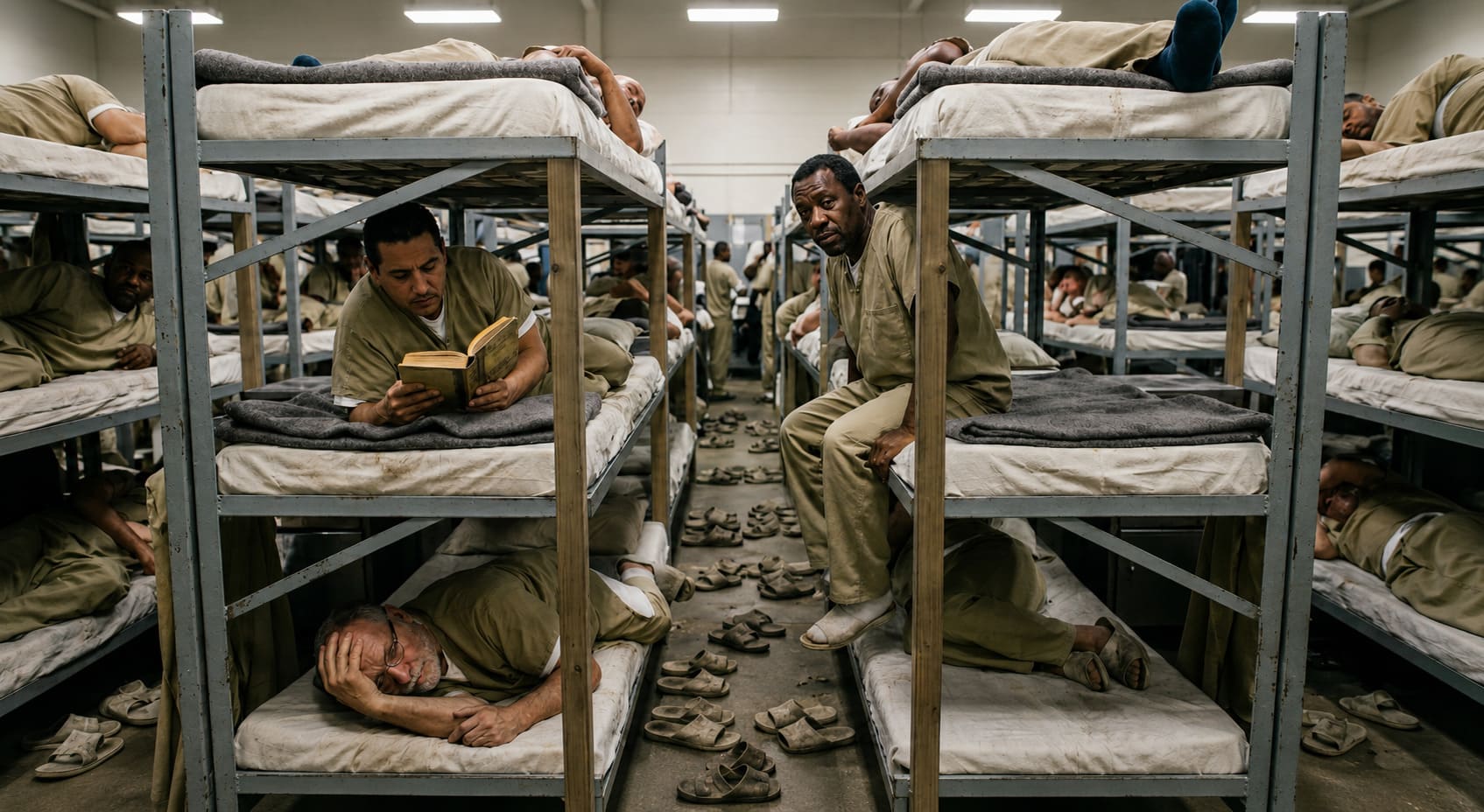
A steadily shrinking inmate population has led the Netherlands to close several prisons over the past decade. This reflects the Netherlands’ alternative perspective on the justice system. Instead of relying on long prison sentences, they prioritize rehabilitation. They practice human-centered detention, where prisons are meant to prepare people for reintegration with society rather than serve solely as places of punishment. By focusing on mental health care, addiction treatment, education, work skills, and planning for life after release, people have a better chance of re-entering society safely and successfully.
A country that takes a very different approach is the United States. The US justice system relies heavily on incarceration as a deterrent and punishment for crime. The US population is approximately 19 times the size of the Netherlands, but the US prison population is approximately 160 times larger. A punishment-based system like this creates long-term problems when it removes people from society without addressing the issues that may have contributed to the crime.
Contributing Factors Provide Context, Not an Excuse
The Netherlands takes into consideration whether a crime is connected to a mental disorder, addiction, or another health issue that may need treatment. In the US, about 40% of incarcerated people have mental health issues, but 63% of them do not receive the treatment they need while incarcerated. Without help, prison punishes people while leaving underlying problems untreated. These untreated issues often involve mental health struggles linked to financial instability, poor access to care, and ongoing stress after release. With addiction, there is a demonstrably increased risk of recidivism if it is not addressed, and effective care should therefore include behavioral therapy, medication, and follow-up support after release.

Credit: Institute for Criminal Policy Research World Prison Brief, CC BY-ND 3.0, via Statista
America’s Modern Slavery Scheme
Dutch prison work programs are designed to connect prison work to reintegration, offering vocational training and certifications. In the US, prison labor is the only constitutionally permitted form of slavery and involuntary servitude. This means incarcerated people can be required to work for very low pay, averaging around $0.52 per hour, or no pay at all. Prison labor often appears to be assigned based on institutional needs, and even when incarcerated people gain real work experience, that work does not always count after release.
For example, California has long used incarcerated people as firefighters, particularly during wildfire season. They gained dangerous and valuable experience, but their criminal records barred them from firefighting work after release until 2021, when a new law created a pathway to certification. Prison work can support rehabilitation when it leads to recognized skills, fairer pay, and real employment opportunities after release, but in all countries, societal biases against formerly incarcerated people still stand in the way.
Most people in prison will eventually be released, but many struggle after release when they leave without treatment, job support, housing, or financial stability. The US’ high recidivism rates show that its prison systems are failing to prepare people to return to society successfully. In the Netherlands, short sentences still carry a risk of reoffending, but those who received alternative sentences like community service were less likely to reoffend.
A Place to Re-Orient vs A Place to be Punished
A rehabilitative system is rooted in fairness and equity because it recognizes that people face different barriers and need unique support to re-integrate and thrive. Shifting from punishment to rehabilitation still holds people accountable while also giving them the tools to rebuild their lives and stay connected to their community.

Credit: US Department of Justice, Bureau of Prisons, Public domain, via Wikimedia Commons
This article was written by a guest contributor, E. Takamura.

Everyone is welcome! We offer DEI programs tailored to meet the needs of all experience levels—find out more about our workshops here.