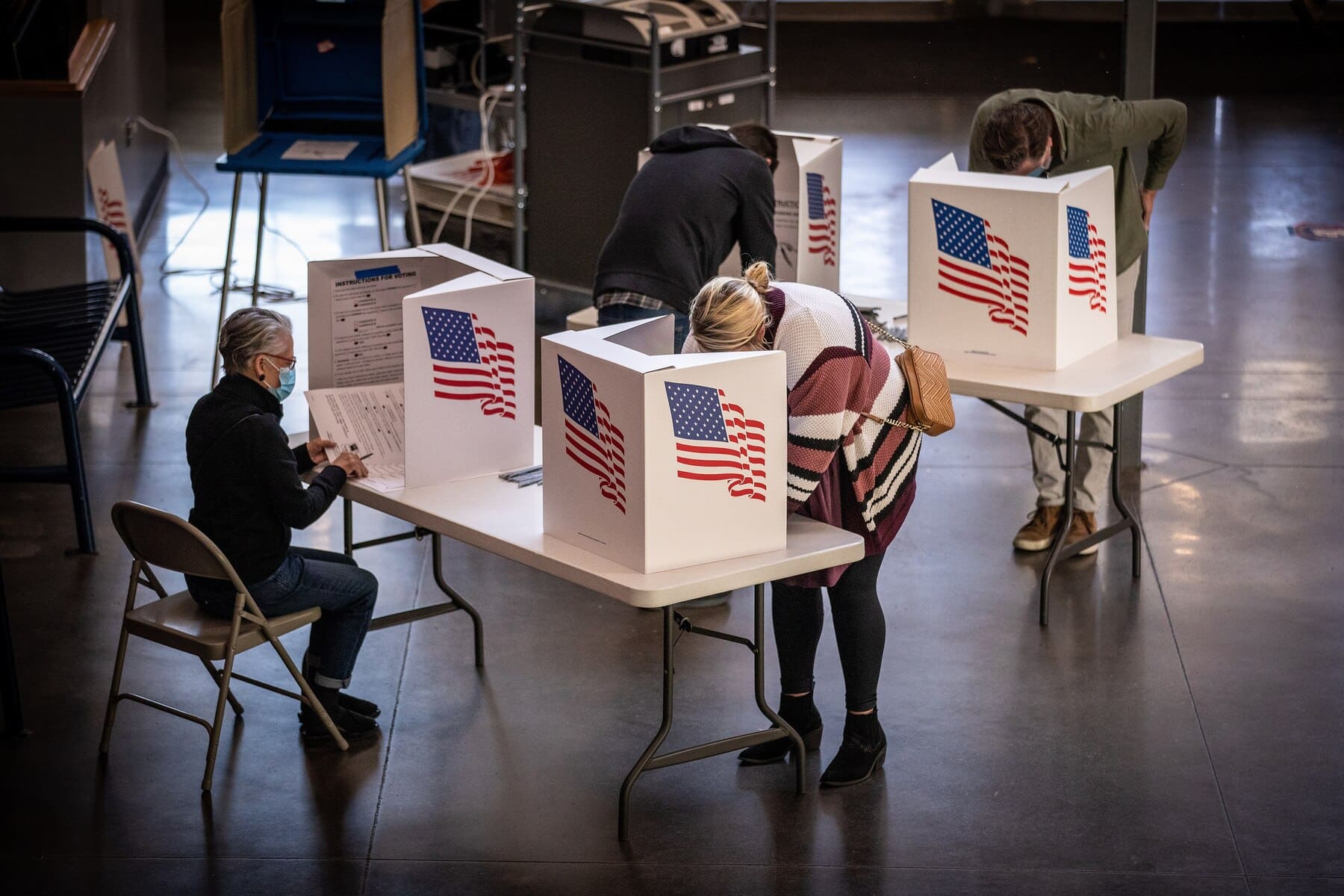
Credit: Phil Roeder, CC BY 2.0, via Wikimedia Commons
The Trump administration continues to hastily generalize instances of voter fraud committed by non-citizens to gather support to pass the Safeguard American Voter Eligibility (SAVE) Act. The SAVE Act is a redundant bill attempting to address already illegal non-citizen voting, which US Immigration Records and Identity Services reportedly found to be incredibly rare, occurring in only 0.04% of voter verification cases.
An Unneeded Barrier: Registered Voters Are Already Verified.
As written, this bill could, however, disenfranchise millions of minority citizens by creating barriers to voting. The SAVE Act would reduce the number of acceptable identification documents that citizens can present to verify their identities when registering to vote. Instead of simply presenting a valid driver’s license, the SAVE Act would require voters to present a birth certificate with specific markings matching their current ID, a U.S. passport, a tribal ID card, and other types of identification. Due to their lack of variability and explicitness, a U.S. passport may be considered the most verifiable, yet due to its expense, only 53% of Americans have one.
The birth certificate requirement is most concerning, as any discrepancies in name or gender would require further verification and documentation. This will obviously impact transgender people who have changed their legal gender, but the most wide-reaching impact would be felt by 84% of American women married to men who changed their last name after marriage. The addition of criminal penalties for poll workers who accept previously permitted IDs would more than likely lead to an increase in women and other minorities not being approved to vote. Similar provisions passed in New Hampshire have already presented issues for married women attempting to register to vote using their U.S. birth certificates.

Last name status of women who are married to men
Credit: About 8 in 10 women in opposite-sex marriages say they took their husband’s last name, Pew Research Center, Washington, D.C. (September 7, 2023)
When Someone Else’s Religion Determines What You Can Do
As more opponents of the bill voice concern over its barriers for women, the current administration dismisses these claims and continues to push the Act and other ultra-right policies aimed at limiting minority rights. Accordingly, the administration also spotlights supportive political Christian conservative groups who have called for more extreme measures in ending women’s suffrage by replacing it with a “household voting system”. Prioritizing outdated patriarchal gender roles, this system would have all married women give up their vote to their husband. Advocacy for this system echoes broader gender dynamics that allocate social, political, and economic power to men while women are restricted to the home.
This movement has also found a hold via social media trends like the “tradwife”. Tradwife influencers are young married women who romanticize their stay-at-home life raising children and advocate for leaving things like their finances and work to their husbands. The household voting system and tradwives both support giving up political or financial freedom in exchange for less conflict with their husbands, which is an unjustifiable and deceptive trade. Stressed young women who are trying to advance a career in the middle of an affordability crisis are tempted to accept this lifestyle, one that remains totally silent on many hardships that come from such economic and political isolation.
We Need to Progress, Not Regress.
Advocating for the household voting system and romanticising tradwife lifestyles ignores centuries of women’s suffering and fighting to codify the rights we have today, like being able to participate in the formal economy and voting. Having open conversations is important, especially in correcting false claims about women’s roles in society. To combat movements that work to suppress women, everyone must participate. We all can repost educational materials on social media and join local groups protesting against infringements on women’s rights. Yet, most importantly, we must vote for candidates who advocate for enshrining women’s rights into law.

This article was written by a guest contributor, S. Jarvis.

Ready to empower your team and organization? Explore DE&I best practices and success cases. Learn how to get started with our resources.