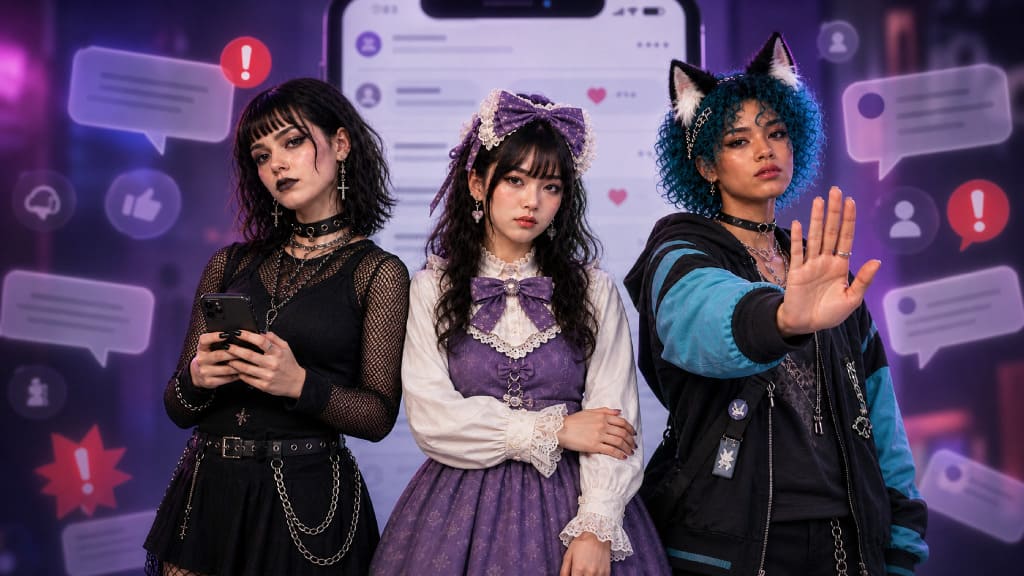
Alternative, or alt, fashion was started as a way of rejecting the norm, questioning the status quo, and self-expression. Today, it is still seen as a symbol of rebelling against the mainstream and being your authentic self. With the rise of social media and anonymity online, dressing alt can attract unwanted attention that can quickly escalate to harassment or something even worse. 91% of women overall have experienced receiving an unsolicited sexual or romantic message on social media, and women in alt fashion communities are no exception. They face many built-in assumptions about their behavior and sexuality because of their alternative fashions, even when they are modest in nature.
Social Media Amplifying Problematic Behaviors Towards Women (Again)
A prominent example is goth fashion. Online memes around goth women became incredibly popular in 2018 and returned in 2024 with the premise of the meme being men wanting a “goth gf” or girlfriend. This has led to this overfetishization of women in the goth subculture, with people increasingly sending unsolicited sexual messages or posting sexual requests under their pictures.
In a similar vein is kemonomimi, a Japanese term that means “animal ears”. This is a new popular subculture and alt fashion on platforms such as TikTok and Instagram where the person wears animal ears and a tail along with other accessories. According to feminist writer T.A. Noonan, who often writes about anime and video games, catgirls or girls with cat ears and tails, are akin to the West’s playboy bunnies.
They are seen as something to objectify, and people often compare kemonomimi fashion to the kink petplay, unnecessarily sexualizing the fashion accessories.
Modest or Not, A Woman’s Fashion Choices Are Always Judged
Even fashion that covers the person from head to toe can be sexualized and fetishized. Lolita started as a fashion trend for those who wanted to reject mainstream womanhood and find that space between childhood and adulthood.
Lolita fashion involves a lot of knee-length, bell-shaped dresses. The dresses are very modest but still seen by those outside of the subculture as sexual in nature. The name Lolita comes from the controversial novel Lolita, which tells a story of a man lusting after his step-daughter, which may contribute to the association of the subculture with pedophilia and the sexualization of young girls.

Credit: Dominic Alves, CC BY 2.0, via Flickr
Fashion Is Never Consent
All these examples follow the same rule: nonconsensual sexual objectification. Participation in alt fashion is often seen as an invitation, but women’s choice in clothing is not a signal for wanting sex or physical touch. A study found that when women dress more feminine or sexy, they are dressing to feel more attractive, not to attract others. It is for themselves.
Women are keenly aware of their surroundings. This vigilance is partially shaped by the awareness that men can become violent if their unwanted sexual advances are rejected. As a result, many women choose not to express themselves or hide away to avoid this unwanted attention. It’s up to men to be allies to help reduce violence and harassment against women. We should aim to create a world where women can express themselves through their fashion without the fear and anxiety of unwanted male attention or, potentially, something worse.

Credit: N509FZ, CC BY-SA 4.0, via Wikimedia Commons

We offer practical DEI programs tailored to help you apply inclusive practices effectively in everyday business. Discover our workshops to see what’s available.