Credit: pikisuperstar via Magnific
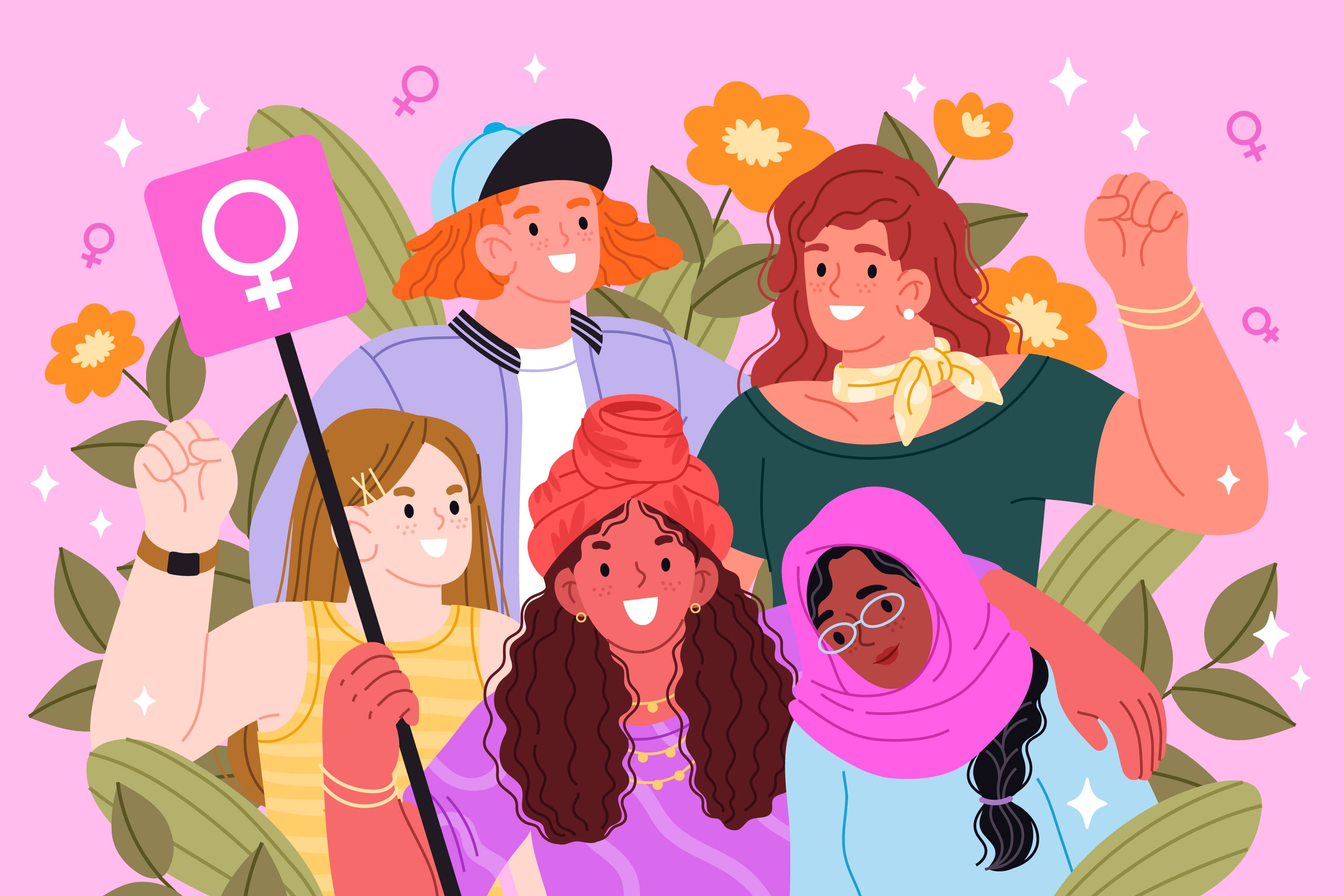
Social media has amplified growing misconceptions about feminism. It is easy to come across posts, videos, and comments that portray feminism as hostile, extreme, or openly anti-male. I’ve lost count of how many times I’ve seen feminist ideas twisted into something they were never meant to represent. You can find countless examples of manosphere influencers and uninformed individuals bashing feminism online. What concerns me most is how widely these messages are shared. These bad-faith posts are many people’s only exposure to feminist thought, so they may genuinely not know what feminism actually stands for. This makes clear, accurate conversations about feminism more important than ever.
Feminism’s Branding Problem
Due to the “feminine” root word, some may assume that feminism is simply the opposite of patriarchy, meaning it is a movement to replace male supremacy with female supremacy. This is absolutely untrue. The feminist movement began as something to address issues related to the oppression of women, but has since grown to tackle a multitude of disparities related to sex, gender, and marginalization.
Feminism is not about hating men or blaming individual men for every problem created by patriarchal systems. It also does not claim that all men benefit from patriarchal systems, nor does it suggest that men are incapable of experiencing inequality, discrimination, or harm themselves. What it does is recognize that, like men, women are not one homogeneous group. Gender intersects with race, class, sexuality, disability, culture, and other aspects of identity, meaning that even people within the same community experience inequality in different ways. At its best, feminism makes space for those differences rather than expecting everyone to have the same experience.
Removing Oppressive Structures, Not Building New Ones
At its core, feminism is about equality and the freedom to choose how to live, about one’s ability to define their own path in their contribution to a peaceful society. It challenges patriarchal structures that limit everyone, not just women. It promotes the belief that people should not be punished simply for failing to conform to traditional gender roles. As the late Gloria Steinem said, “The purpose of feminism is to free the uniqueness of the individual and to understand that inside each of us is a unique human being who is a combination of heredity and environment.”

Where Are All The Feminists?
This focus on equality is reflected in public attitudes, even among people who do not identify as feminists. A YouGov survey found that 77% of respondents agreed that “men and women should have equal rights and status,” but only 32% claimed to be feminists. It’s clear that many people already hold feminist values, but the misuse of the feminist label has made people hesitate to associate with the movement itself.
Feminism should not be understood as a competition between genders. Equality is not a zero-sum game. Women gaining rights, opportunities, or greater freedom does not mean men lose theirs. Creating fairer systems expands freedom rather than taking it away. This is something we should strive to achieve together. Seeking out legitimate feminist thinkers, research, and writing rather than social media interpretations will help us better understand the movement, correct misrepresentations, and secure those freedoms.
Online pop feminism is not what feminism is at its core. Men do not need to be the enemy for feminism to succeed. In fact, men have an important role to play in changing the conversation, particularly by challenging misconceptions of feminism among other men. Feminism is not about “men are trash” or women replacing men at the top. It is about creating a future where gender does not determine a person’s opportunities, expectations, or freedoms.

Credit: Joanna Morris via YouGov

If you are interested in diversity after reading this article, our program may be of use to you. Find more details here!