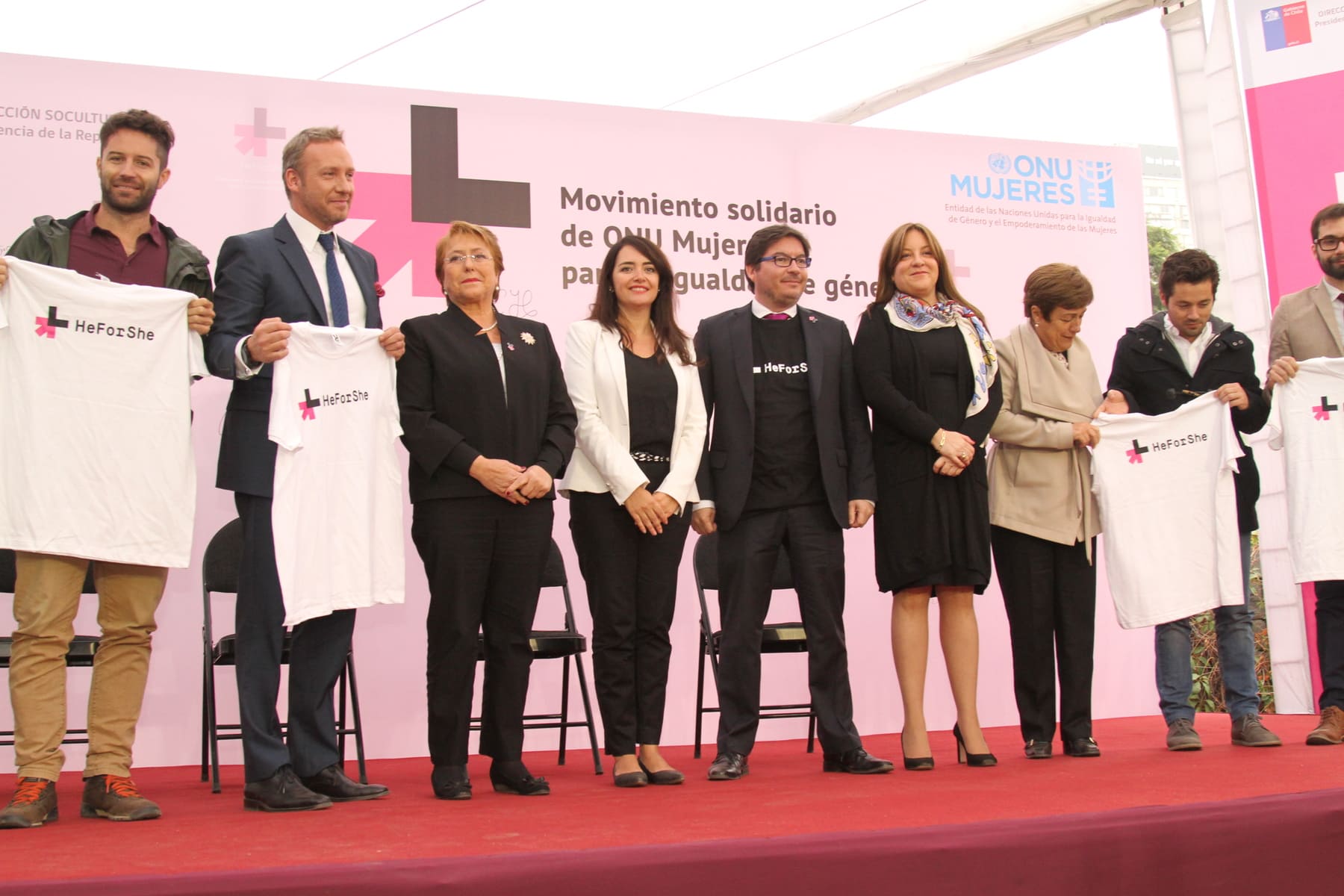
Minister Víctor Osorio (Chile) attend the launch of the HeForShe campaign
Credit: Ministerio Bienes Nacionales, CC BY 2.0, via Wikimedia Commons
Gender equality in the workplace remains a complex challenge that male allies have the power to influence. Allyship is an ongoing and active commitment to using one’s privilege to uplift others. As most leadership positions are held by men, their role as allies is essential in closing the gender gap because they hold the power to reshape workplace systems. Gender equity initiatives often highlight women’s experiences and challenges, but they also need to spotlight the role men can play. As Michael Kaufman, author of the Male Ally Handbook, shares, men can “complement the work of achieving gender equality as equal partners, crafting and implementing a shared vision of the future.” While many men want to be allies, they need support in learning how to become one.
Learn to See the Many Ways Gender Affects Opportunity
The first step, according to the Allyship Guide, is for men to learn and recognize their own privilege. Harvard Business Review describes this as “deep curiosity,” a commitment to understanding your own and others’ experiences. Men may not always recognize overt sexism, but deep curiosity helps one to understand how male privilege can manifest in formal and informal ways. For example, curiosity can allow men to discover that having a male name increases the chances of being hired, due to a bias of competence toward men. This bias shapes pay negotiations, the types of work men are offered, promotion rates, and contributes to the gender wage gap. It can also uncover structural barriers, such as policies that prevent promotions for part-time staff, expectations to work overtime, and after-hours bonding over drinks, which can all exclude women from power networks, even when invites are apparently open to everyone.

Gender wage gap by comparing women’s earnings to men’s
Data via OECD
Leaders: Wield Your Influence to Promote Positive Change
The Men Make a Difference report recognises that men are not a monolith. They bring diverse identities, experiences, and levels of privilege and power. That’s why engaging men in allyship must happen at every level, starting at the top. Japanese listed company LY Corporation has advanced its DEI initiatives by partnering with their male CEO on DEI priorities and hosting a seminar to build awareness of gender bias for male executives. Takao Ando, former president of Sanyo Chemical Industries, has also used his position to promote gender equality by removing tenure requirements for managerial roles, so that even women who have paused their careers due to childcare or other reasons are still able to be promoted to management positions.
At All Levels, We Can Have an Impact
While this progress is a step in the right direction, singular leadership actions aren’t enough. If gender-based biases and structural barriers around women’s competence aren’t addressed at all levels, impact will be limited. Organisations can provide resources like the Male Allyship Toolkit, which offers practical and actionable steps that aspiring allies can take. Harvard Business Review also highlights that small acts, such as speaking up when stereotypes arise, scheduling inclusive team events, and learning about lived experiences, are just as important to developing a more equitable work culture. I’ve had male leaders model this by scheduling meetings during school hours or factoring caregiving into travel plans, and this consideration and allyship made it possible for me to access career-advancing opportunities.
Allyship isn’t easy, and it’s not a one-time action. True allyship requires humility, curiosity, a willingness to be uncomfortable, and a continuous desire to act. When done well, it can better not just workplaces, but the world around us for everyone.

This article was written by a guest contributor, K. Maseli.

Stay connected on your DEI journey with Learning Cycle. Explore our workshops and success stories to empower your team.