Credit: Lwandlexb, CC BY-SA 4.0, via Wikimedia Commons
People tend to assume their own beliefs are universal. Because it’s considered impolite to talk about, those assumptions often go unchallenged. Only about one-third of the global population is Christian, but in the West, Christians are, without question, the cultural majority. In Western countries and their former colonies, Christianity is interwoven in our lives in many ways, from our holidays to our language and most prominent foundations. Christianity is considered the norm or “default” religion, so non-Christian cultural practices are othered.
Control the Religion, Control the People
Historically, and in the present day, Christianity has been a vehicle of colonial oppression. Many colonists used their Christian beliefs as justification for their conquest. Religious domination has been an invaluable tool for powerful countries to suppress indigenous and spiritual beliefs and maintain cultural hegemony in favor of the colonial power. European nations saw the native people of the lands they conquered as uncivilized, and forced conversion to Christianity was necessary to properly assimilate them. This practice has continued into living memory. In the United States and Canada, the mass removal of indigenous children from their families to be placed in Christian residential schools continued until the 1990s.

The most common religious affiliation in each country
Credit: Pew Research via Our World in Data, CC BY
Reconnecting with Traditional Faith in the Modern Day
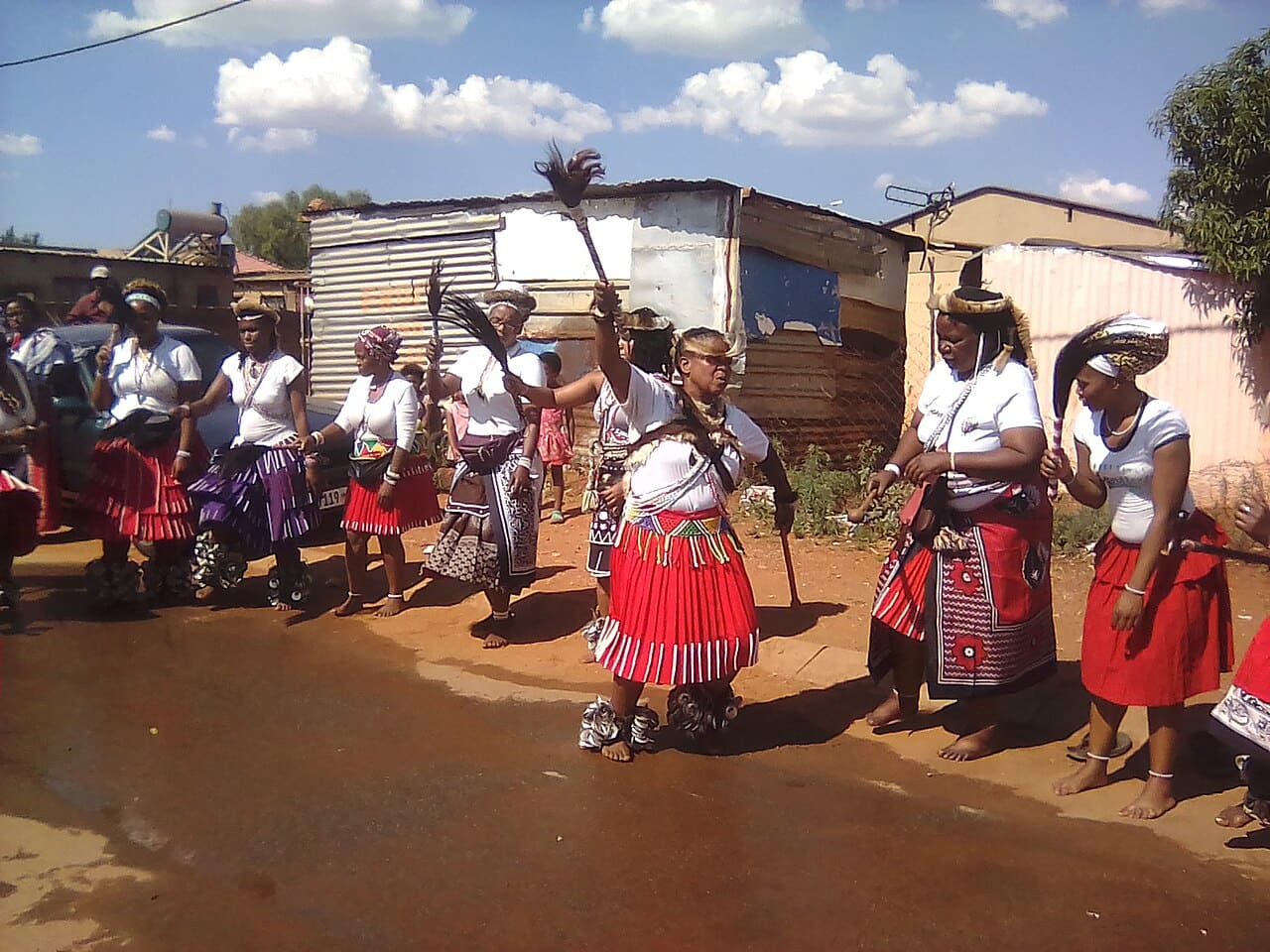
While there are indigenous peoples who have rediscovered and reclaimed their native beliefs, most in regions formerly colonised by Christian nations still identify as Christian. As a result, those who honor pre-Christian native beliefs can feel ostracised even in their own countries of origin. The “witch doctors” of Southern African cultures are a good example. The term “witch doctor” is a colonial invention, and a more apt description would be a traditional healer or a shaman. They commune with the spiritual realm and provide guidance, including herbal remedies when necessary. I have seen for myself how a community can turn on those who follow this calling, or regard people who seek help from traditional healers with fear and suspicion.
A Semantic Difference: Majority “Faith” vs Minority “Woo”
People of color who practice their own culture’s traditional beliefs are often looked down on as “primitive” or “superstitious”. In contrast, white people who adopt and practice those same beliefs are just considered “quirky,” “eccentric,” or “alternative”. A lot of these native beliefs are experiencing a revival or resurgence in the West, appropriated and repackaged as part of the “New Religion Movement.” This terminology lumps together traditional spiritual systems with practices that were previously described as “cults.” The word “cult” has such negative connotations that describing traditional spiritual systems in this manner is derogatory.
Religious freedom is recognized as an inherent human right. However, many anti-religious discrimination laws do not extend these protections equally. Some nations do extend protections and privileges to the “acceptable” majority religion(s) only. Of course, the religions that fall into the “unacceptable” bubble are beliefs held by formerly, or currently, oppressed peoples.
Developing an acceptance of and respect for beliefs different from our own is necessary for constructing a multicultural world full of love, acceptance, and growth. The fight to eliminate religious privilege and bias can not take place only in the legal domain; it’s a battle we must fight in the social realm too. We must destigmatize minority faiths and eliminate social barriers preventing people from reclaiming their cultures and heritages. Stop fearing the “other.” There is no danger in difference.

This article was written by a guest contributor, T. Msiza.

Why not become an advocate and ally? Discover more and get involved!