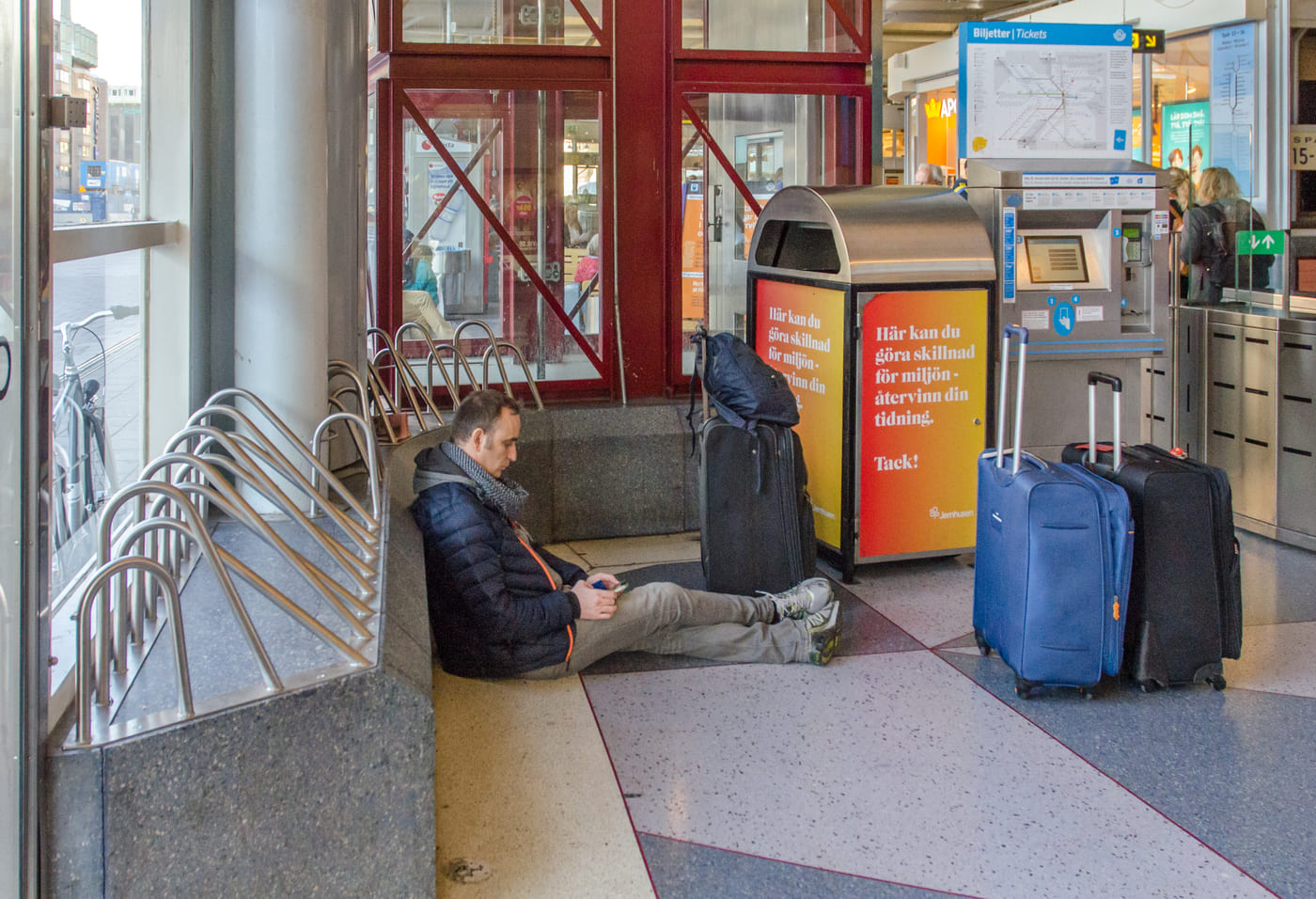
Credit: Frankie Fouganthin, CC BY-SA 4.0, via Wikimedia Commons
You’ve probably noticed some interesting choices in terms of city design, such as slanted or leaning benches, spikes on windowsills and under overpasses, and maybe even bars on the corners of buildings in your local city. All of these are examples of what is called “hostile architecture,” or defensive or anti-homeless architecture. These installations are claimed to be anti-crime and meant to limit activities people can do in public spaces, such as skateboarding, vandalism, sleeping, or camping. In the US, these architectural designs became prevalent in the 80s due to fear that homeless individuals would discourage investments or visitors to cities. However, hostile architecture isn’t just prominent in cities in the United States, but all over the world.

Credit: Dougtone, CC BY-SA 2.0, via Wikimedia Commons
Harmful to All, Beneficial to None
What is the harm if hostile architecture is meant to be anti-crime? Keeping crime out of cities is a good thing, right? The overall issue is the exclusionary nature of hostile architecture. Unlike curb cuts for wheelchair users which are intended to help one community but ultimately benefit everyone, hostile architecture is meant to deter one community while harming everyone. When it is used, it isn’t just keeping homeless people from resting on benches. If you have any condition where sitting often is needed, you can forget about resting in some cities. This harm extends to other marginalized groups, such as the elderly, pregnant people, and people with disabilities and chronic pain. In fact, many of these structures don’t even comply with the Americans with Disabilities Act, a civil rights law created to prohibit discrimination against individuals with disabilities.
Making Public Spaces Less Accessible
Some benches or structures may come across as inclusive at first but end up being too awkwardly built for wheelchair users to use them due to their shape or height. This is a major step back from the progress some cities are making towards becoming more inclusive, such as London’s work on the Tube and many European cities’ plans to make historical buildings more accessible.
Even those with a background in architecture agree that hostile architecture affects everyone. Taro Igarashi, a professor of architectural history and theory at Tohoku University, Japan, described hostile architecture as a way that we are “chipping away at our hearts” and creating spaces where, in the end, no one is capable of resting. In his interview, he shared a story about how Ueno Park in Tokyo used to be frequented by wounded and disabled veterans in the 1970s. No one wanted to tell them to leave out of guilt, but once it became mainly homeless individuals, they became targets worth excluding. This anti-homeless sentiment is prevalent in the US as well, with the Supreme Court ruling that cities can punish people for sleeping in public spaces, another way to villainize homeless people.
Fighting Back With Inclusive Design
While it looks like hostile architecture isn’t going away any time soon, a new design choice known as “friendly architecture,” designs that make spaces inclusive and encourage use, is on the rise. RainCity Housing in Vancouver, Canada is an example with their unique bench design that can fold out into a temporary shelter for those who need it. In order to create these inviting and more friendly spaces, it’s important that individuals make it known to their city councils and city planners that they don’t want more hostile architecture. They want more usable spaces that consider the equity of all individuals, including the homeless population.

Credit: The Bench Project, Vancouver, by Spring Advertising

We offer practical DEI programs tailored to help you apply inclusive practices effectively in everyday business. Discover our workshops to see what’s available.