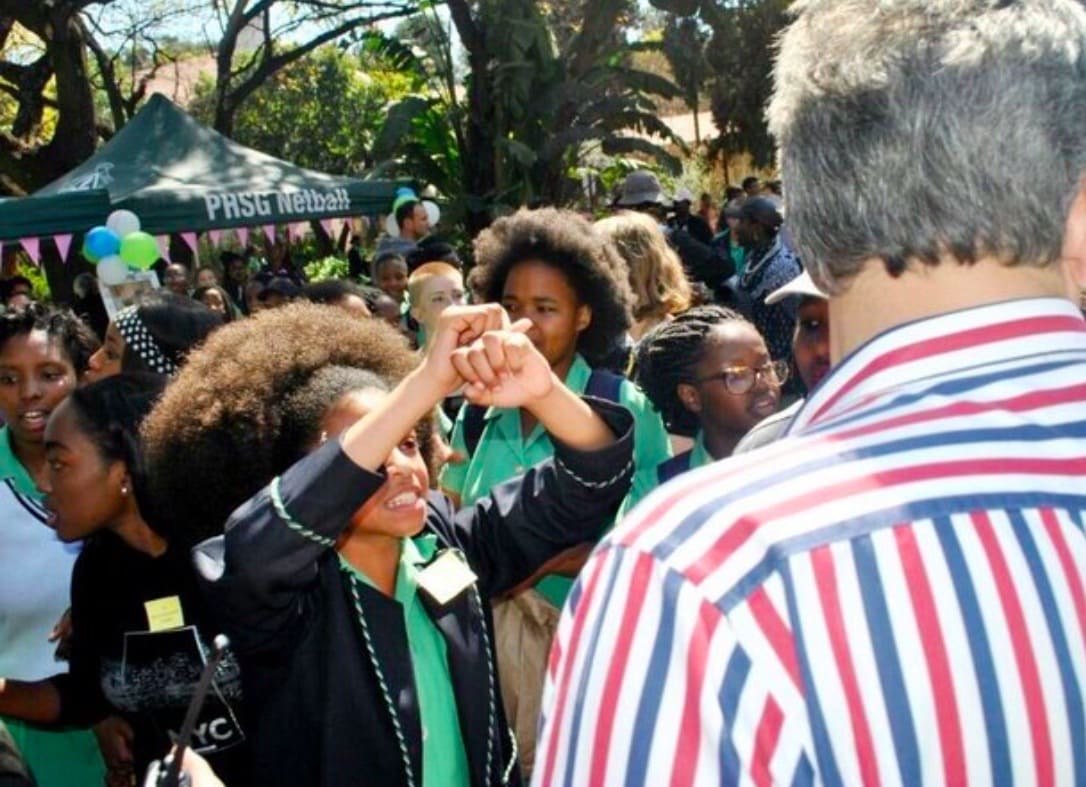
Pretoria Girls High School students protest racist standards targeting natural Black hair
Credit: @Essence via X
Hair has long been a powerful symbol of identity, culture, and pride in South Africa. For Black South Africans, natural hairstyles such as afros, braids, and locs are not merely aesthetic choices but profound expressions of heritage and resistance. However, these styles have often been subjected to discrimination in educational and professional settings. Grooming policies in schools and workplaces have historically marginalised natural Black hair, deeming it unprofessional or untidy. This exclusion underscores the need for Diversity, Equity, and Inclusion (DEI) initiatives to address and rectify such biases.
A Long-Standing Prejudice
The roots of hair discrimination in South Africa can be traced back to apartheid-era beauty standards, which favored Eurocentric features and aesthetics and associated Black hair with being dirty and unkept. These standards permeated all parts of society, influencing perceptions of professionalism and neatness. A notable example is the 2016 incident at Pretoria High School for Girls, where Black students were reportedly told to straighten their hair to comply with school rules. This led to protests and widespread media attention, highlighting the ongoing struggle against hair-based discrimination in schools.
In the workplace, similar biases persist due to the “politics of respectability.” Conforming to mainstream beauty standards is seen as a prerequisite for acceptance and success, causing natural Black hairstyles to be perceived as less professional.
This negatively affects hiring decisions and career advancement opportunities for Black individuals. Even cultural expressions like the hijab are seen as unprofessional within colonial norms.
The Consequences of Forcibly Erasing Identity
Hair discrimination also has a profoundly negative emotional and psychological impact, harming self-esteem and mental well-being. For many Black individuals, being compelled to change their natural hair to fit societal norms can lead to feelings of identity suppression and diminished self-worth. As a result, 66% of Black women change their hair for interviews, with 41% straightening it, and 25% reporting interview discrimination based on their hairstyle.
Despite these challenges, activism and awareness are driving change. The protests at Pretoria High School for Girls serve as a testament to the power of youth-led movements in challenging discriminatory practices. Exposure to individuals from diverse backgrounds, cultures, and identities helps reduce the biases that people develop about race.
Inclusion Is Key: Protect Black Hair to Protect Self-Expression
Furthermore, the global movement advocating for the protection of natural hairstyles has gained momentum. Initiatives like the 2019 CROWN Act in the United States, which prohibits race-based hair discrimination, have inspired similar discussions worldwide. South Africa established The Prevention and Combating of Hate Crimes and Hate Speech Act of 2023, which makes hate crimes that infringe on identity punishable by law.
As someone who participated in the fight against hair discrimination in the Pretoria High School for Girls protest of 2016, I believe and have come to understand that hair discrimination is a multifaceted issue that intersects with cultural identity, historical legacy, and systemic inequality. True inclusion entails recognising and celebrating natural Black hairstyles without imposing or reinforcing previous restrictive norms. The DEI initiatives that have started to take shape must encompass hair as a critical component of embracing full identity and dignity, ensuring that all individuals can express themselves authentically without fear of discrimination.

This article was written by a guest contributor, T. Chirambo.

Why not become an advocate and ally? Discover more and get involved!