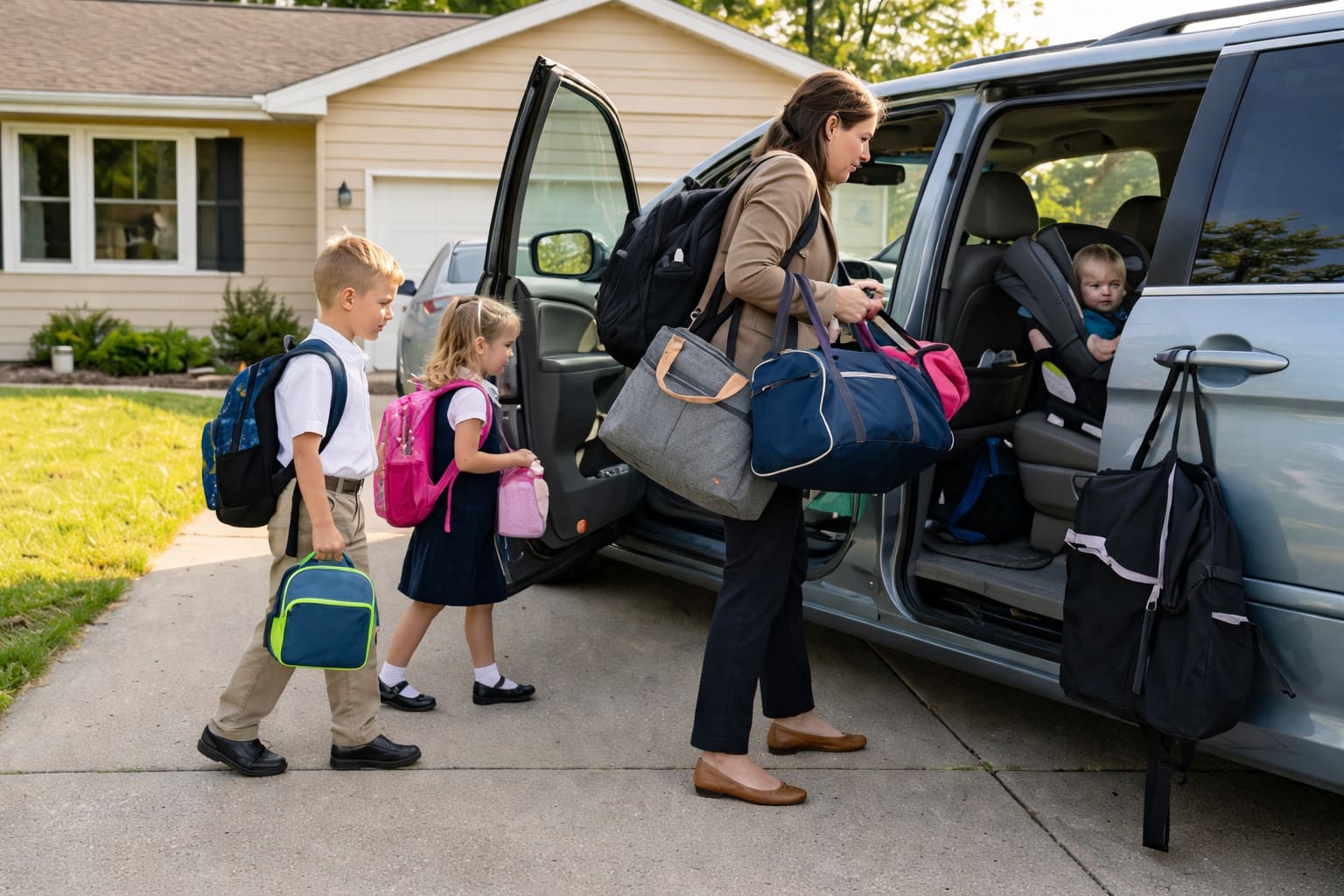
Roughly 1 in 3 kids in the U.S. live in a single-parent family, yet the public attitude towards those who navigate parenting alone has not improved. 14.4 million children live only with their mother, and 3.5 million children live only with their father. Single parents can often be perceived as irresponsible and less stable, leading to judgment and social exclusion. 64% of single parents have reported that they experienced some form of discrimination or unfair treatment because of their single-parent status.
Unavoidable Stigma of Parenting Solo
Parenting alone is widely recognized as demanding regardless of gender. Sociologist Dr. Carroll explained that mothers who took part in her research interviews on the single-parent stigma described feelings of isolation and frustration with negative stereotypes. Single fathers are often patronized, seen as incapable of doing carework. Single mothers are often targeted with comments claiming their inadequacies are the reason their children will suffer. This is a common double standard single parents face. As a single parent myself, I have encountered this kind of judgment where I’ve been told that I am not doing enough, or that my child will fail because he does not have a male role model in the home. These types of comments are not expressed out of concern but framed as personal failures.
For a Single Parent, Gender Roles Fall Apart
As a society, we continue to have overall lower expectations for fathers than mothers. Mothers are often viewed as caregivers. They are tasked with handling the emotional load and demanding housework. It’s not often that a mother is referred to as the provider or protector of the family. They are expected to organize school events, doctor appointments, extracurriculars, and all social events, all while carrying the mental and emotional strain of parenthood. Fathers, on the other hand, are viewed more as the provider, one who goes to work, earns the income, and repeats the cycle. While these expectations differ by gender, single parenthood collapses both roles into one, leaving a single parent responsible for all caregiving and financial responsibilities without shared support. Understanding that these are socially created views, communities must start to create environments where single parents feel supported and recognized as competent caregivers.

Single and married parents by median income and poverty rate (2022)
Credit: Integrated Public Use Microdata Series, Current Population Survey Data for Social, Economic, and Health Research: Version 11.0 via Center for American Progress
Especially Vulnerable to the Affordability Crisis
Expenses such as housing, health insurance, groceries, childcare, and even school programs can often cause mental burnout for parents, especially when trying to juggle it alone. These are not just concerns for low-income households anymore. Even middle-class families are feeling the pressure. The absence of a partner to share these emotional and physical labors results in single parents being stretched too thin. In 2023, a CAP analysis showed that single parents are at high risk of sliding into poverty, with single mothers having the lowest earnings and the highest poverty rates compared with both single fathers and married parents.
Single parents are not failures. It’s not a sign of being irresponsible or incapable of successfully raising children. Yet, these assumptions are still common today. Instead of understanding and empathizing with those parenting alone, society continues to choose judgment. It holds single parents to impossible standards while withholding support. Parenting is no easy task, especially without a partner. Acknowledging the reality of single parenthood starts with replacing that judgment with empathy and support.

This article was written by a guest contributor, M. Hickman.

We offer practical DEI programs tailored to help you apply inclusive practices effectively in everyday business. Discover our workshops to see what’s available.