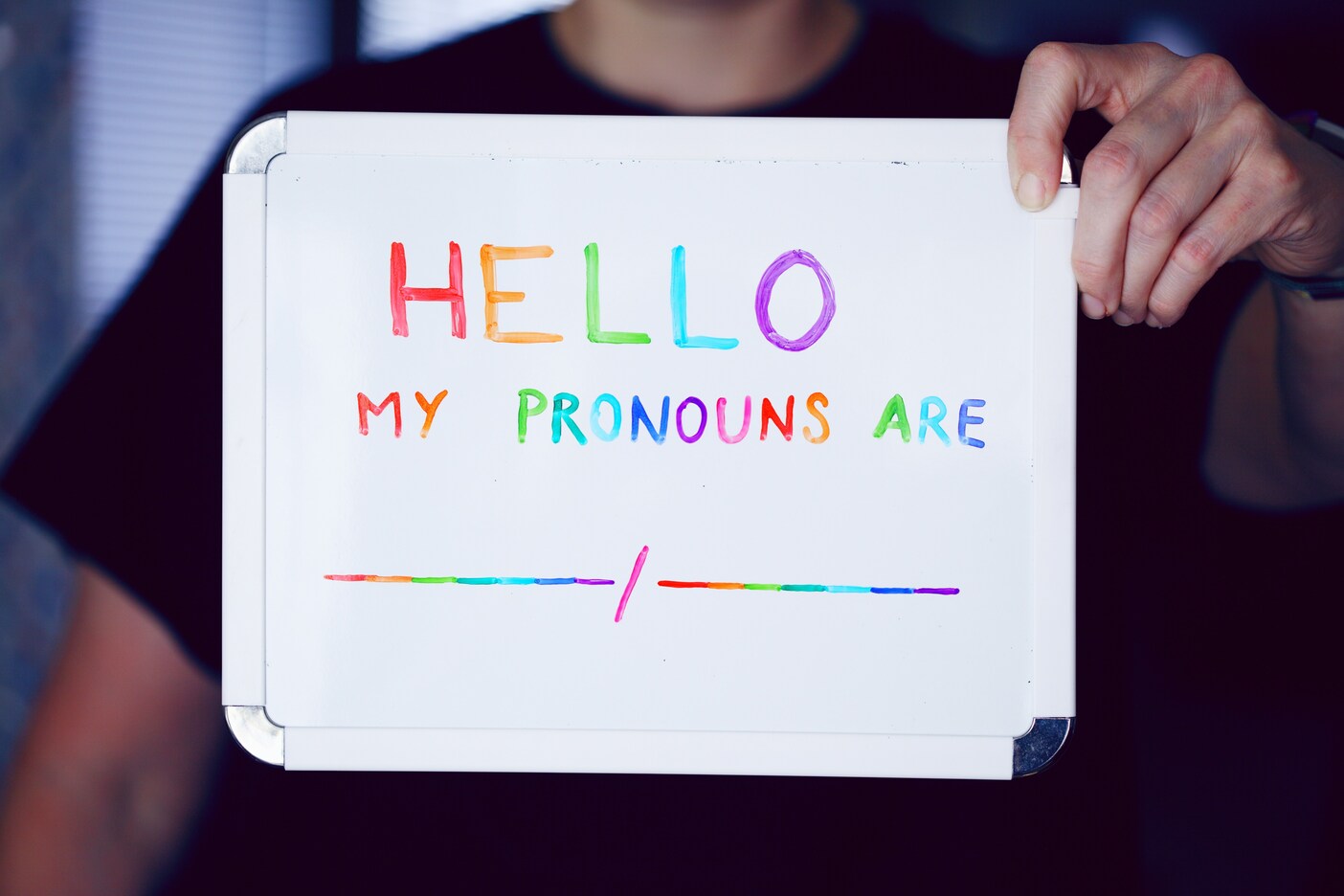
It is estimated that about 11% of the US’s adult LGBTQ+ community identifies as non-binary. That’s around 1.2 million people in the US, most being under the age of 30. According to the National Center for Transgender Equality, non-binary is defined as someone who doesn’t identify as male or female. Many of these individuals opt not to use the traditional gendered pronouns she/her or he/him. Often, they will use the singular, ungendered they/them.
Hiring Bias Against Non-Binary Individuals
However, non-binary individuals may be facing hiring bias over this pronoun usage. A study conducted in 2023 by Business.com found that those who put they/them pronouns on their resumes are less likely to get callbacks. Test resumes with they/them pronouns and control resumes without pronouns were both submitted to businesses, and those with they/them pronouns got less attention and fewer callbacks for interviews. However, it is not just non-binary individuals facing discrimination from hiring managers for pronoun usage. Resumes that put he/him or she/her pronouns saw a decrease in interest by 5% compared to resumes without. They/them pronouns saw even less interest.
Impact on Different Fields
This bias can increase depending on the field the person is applying for. When a non-binary person who was assigned female at birth applies for a job in a male-dominated field, they receive positive responses about 10.9 to 11.8% less often than cisgender women applying for the same type of job. The same occurs when people assigned male at birth apply for female-dominated jobs. Non-binary individuals seem to be aware of this bias. A majority (51%) believe that putting their pronouns on their resume would lower their chances of getting hired. Very few (8%) believed it would actually be beneficial to their resumes.
Overcoming Pronoun Bias
So why aren’t hiring managers interested in non-binary workers? Views towards genders outside of the binary are still very divided in the US, with more than half of people (65%) believing that there are only two genders. Some reasons given were that they felt that the “pronoun discussion” was better for social gatherings and not the workplace, or that non-binary workers would bring “too much drama.” Hiring managers even outright stated that they wouldn’t be good workers.
Companies also complained that it would be too confusing for them if they had to start using they/them pronouns for certain employees. Around 15% of company leaders from Resume Builder’s survey stated that they would outright refuse to use they/them pronouns if an employee requested it.
Many of the reasons for not wanting non-binary workers seem to be based on unfamiliarity. If they aren’t given the chance to show employers they can be a good addition to the company, how can hiring managers overcome this bias? Blind hiring is seen as a solution but it’s not perfect. According to Harvard Business Review, studies that used blind hiring showed that job seekers from marginalized groups got more interview opportunities compared to the general process. Blind hiring isn’t the simple fix people may think it is, though. It can help with DEI initiatives, but it can hinder companies who are actively seeking diverse talent pools.
Perhaps a better solution is for pronouns to be more commonplace in the workplace by adding pronouns to email signatures, sharing personal pronouns more in the office, or embracing more gender-neutral language such as businessperson rather than businessman. Making pronoun usage, especially gender-neutral pronoun usage, more common could help decrease the perception of it being “confusing” or “drama-inducing”.

We offer practical DEI programs tailored to help you apply inclusive practices effectively in everyday business. Discover our workshops to see what’s available.