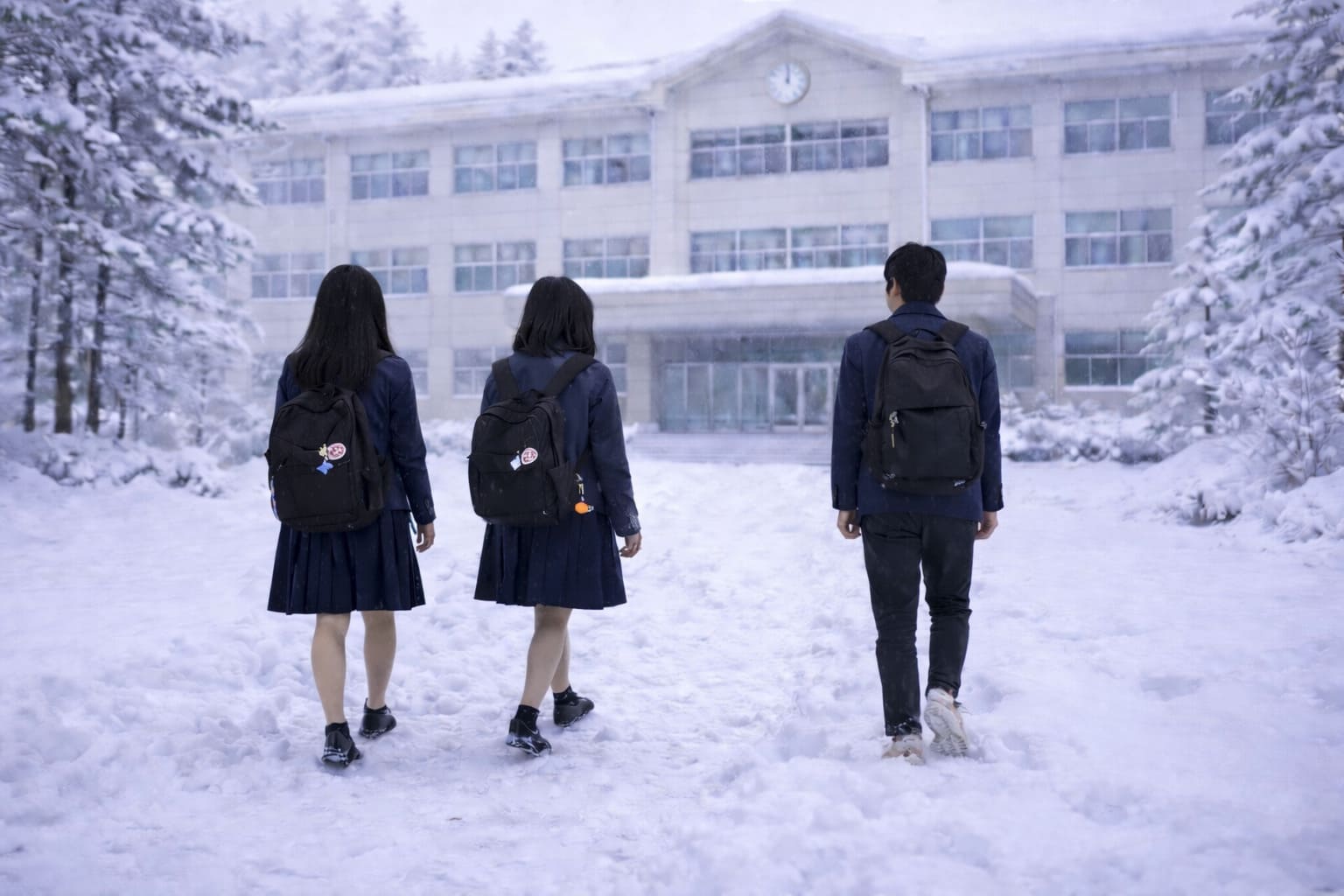
School uniforms are common in many countries, including the UK, South Africa, India, and parts of Southeast Asia, though the level of strictness varies widely. Some education systems allow flexibility for gender expression, seasonal needs, or cultural dress, while others enforce rigid standards in the name of equality and discipline. Although uniforms are often defended as neutral or equalizing, strict appearance rules can overlook student well-being and reinforce outdated norms. In practice, however, purported benefits like improved safety and reduced competition are uneven, with some students bearing the physical and emotional cost of rigid rules.
Unified by Uniform
Modern Japanese school uniforms were introduced in the late 19th and early 20th centuries, influenced by Western military and naval styles. Sailor-style uniforms for girls and military-inspired uniforms for boys became symbols of discipline, order, and national identity. These designs have remained largely unchanged, even as Japanese society has grown more diverse in gender expression and cultural background. As a result, historical gender norms continue to shape students’ everyday experiences. Living in northern Japan, where winter temperatures can be severe, I see many middle and high school girls walk to school in freezing temperatures wearing skirts, while boys are allowed to wear long pants. This scene shows how school uniform policies are not simply about clothing, but about prioritizing gender expectations, tradition, and power over inclusion.

Use of School Uniforms by Country (Blue: Uniforms are widespread / Brown: not common)
Credit: Killarnee, CC BY-SA 4.0, via Wikimedia Commons
When Your Body Is Against the Rules
Strict appearance standards in Japanese schools extend beyond clothing to include hair color, texture, and style. Students are typically expected to have straight black hair, and dyeing is prohibited. These policies ignore ethnic diversity, mixed-heritage students, and natural biological variation. This often leads to punishment, embarrassment, and long-term damage to students’ self-esteem. Children with naturally lighter or curly hair are sometimes suspected of rule-breaking and pressured to prove their hair is natural.
A Lifetime of Performative Unity, not Inclusion
Research from Ohio State University suggests that school uniforms do not consistently improve student behavior or academic outcomes. As such, strict appearance rules are only succeeding in limiting self-expression and suppressing cultural and racial identity. This emphasis on conformity carries into professional life and is the root of broader workplace appearance bias in Japan, particularly those affecting women and people of color.
In early adulthood, graduating college students wear near-identical “recruit suits” that function as a visual uniform to signal seriousness and compliance. For many, this period of forced conformity is deeply stressful, as it marks a turning point into adulthood where failure can carry lasting judgment. Once employed, workers are often required to follow rigid, gendered dress codes, including expectations around skirts, heels, makeup, and hairstyles for women, and conservative suits for men. These norms mirror school appearance rules. For women and gender-diverse employees, such expectations can create discomfort and act as barriers to full participation at work.
School uniforms are not inherently problematic. A simple change in policy, such as allowing students to choose from all available uniform options and setting inclusive hair guidelines, can support student well-being without undermining structure. By continuing to push strict, gendered dress codes, we must ask whose comfort, safety, and identity are being prioritized. As classrooms and workplaces grow more diverse, reexamining appearance rules is not just a policy issue, but a question of who is allowed to be seen.

Credit: Kachhna, CC BY-SA 4.0, via Wikimedia Commons

If you are interested in diversity after reading this article, our program may be of use to you. Find more details here!