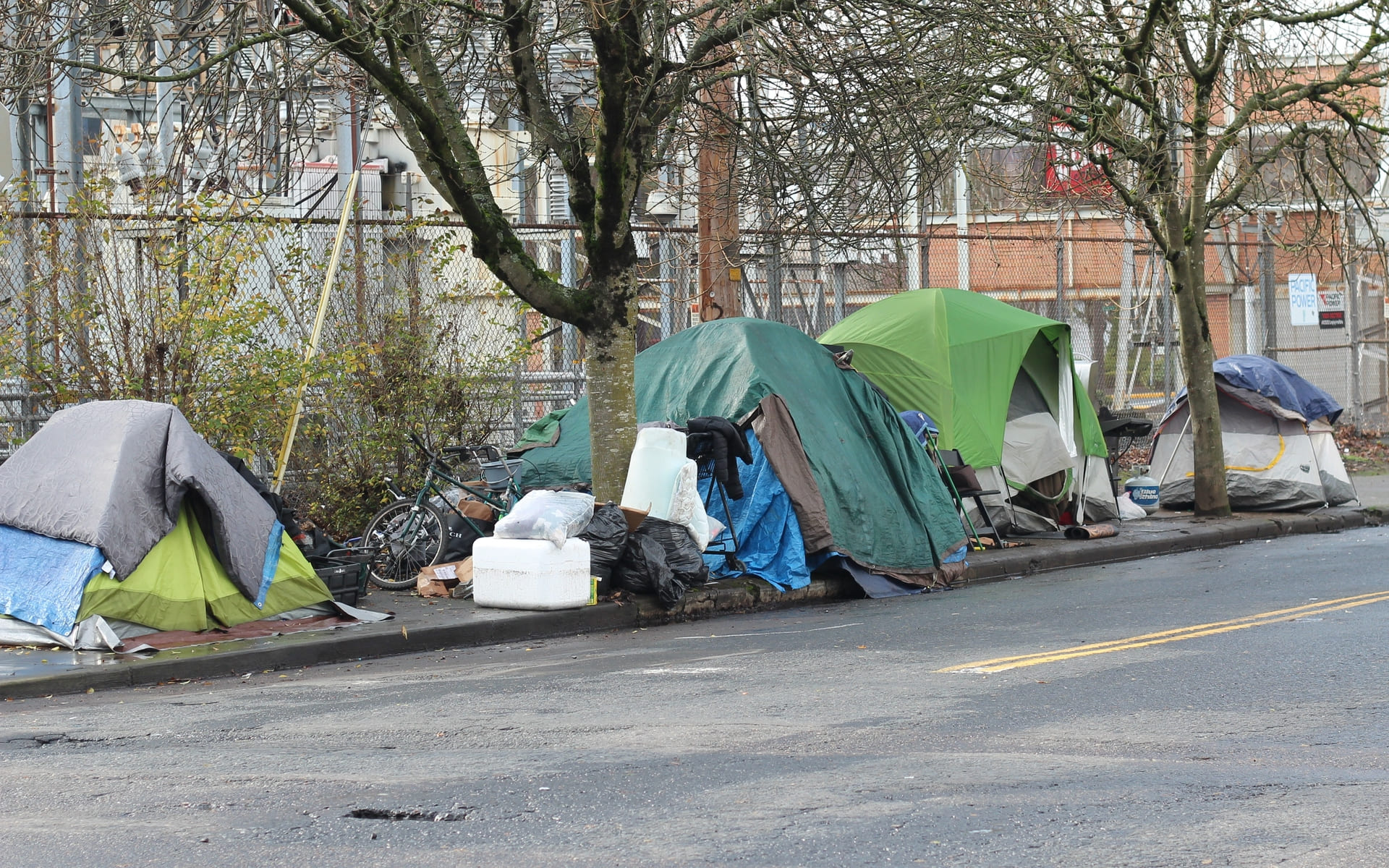
Credit: Graywalls, CC BY-SA 4.0, via Wikimedia Commons
Anti-homelessness legislation has been on the rise in the US. Even though empathy towards the homeless has increased since the 90s, most people don’t truly understand how it impacts those experiencing it. According to the Arlington Life Shelter, homelessness is caused by an array of factors, most commonly addiction, domestic violence, and layoffs, yet still 42% of people believe homelessness is caused by laziness. As a result, leading efforts to reduce homelessness tend to assume this viewpoint while centering the idea of “hostile architecture”, adding to cities’ growing efforts to make the homeless invisible rather than get to the root of the issue.
Solutions Banishing Those Suffering From Homelessness, not Homelessness Itself
Mississippi is among the latest to pass anti-homeless laws, requiring permits for panhandling and banning public sleeping. San Joaquin County, California, supervisor Tom Patti has stated that it is cruel to allow the homeless to stay in one place, and that city ordinances that prohibit being unhoused will encourage homeless people to improve their circumstances.
Such “sweep-it-under-the-rug” laws make assumptions that the overarching solution to homelessness is employment. However, 40.4% of unsheltered people are employed, illustrating that work doesn’t always equal access to housing. The US is facing a housing crisis as access to affordable housing shrinks, while rent and house prices skyrocket. This issue may become even bigger as the Trump administration plans to introduce time limits on access to government and low-income housing. This could put an additional 1.4 million individuals at risk of homelessness if residents are required to find other housing in a time span of just two years.

A growing share of Americans say affordable housing is a major problem where they live, Pew Research Center, Washington, D.C. (January 18, 2022)
A Complex Social Issue Requiring Support from All Levels of Society
Without government assistance, the US may never see significant progress in reducing homelessness. Finland has seen a massive decrease in long-term homelessness between 2008 and 2022, thanks to an initiative known as “Housing First”. “Housing First” was a strategy that replaced homeless services with government housing and a strong welfare system. Much like the US, however, Finland is expecting an increase in their homeless population due to cuts that are expected to occur to these welfare systems, showcasing the overall importance of these systems in any country.
The Importance of Unlearning Anti-Homeless Biases
The rise of homelessness is a systemic issue that is only worsened by the false assumption that it can be fixed simply by getting a job.
Government-funded programs such as housing first, welfare services, and addiction care are widely supported, with 54% of individuals approving of government support for the homeless and 47% supporting further investment in mental healthcare and substance abuse prevention. People want their local and federal governments involved in supporting all members of their communities.

Maria Isabel Housing in Bronx, New York
Without this involvement, homelessness will only rise, and our local cities will become more and more policed as attempts to make the unsheltered disappear are put at the forefront.

People have more faith in local communities solving homelessness than federal and state programs
Credit: National Alliance to End Homelessness

Encourage DEI in your organization with programs tailored to your needs. Find out how we can support you on your DE&I journey.