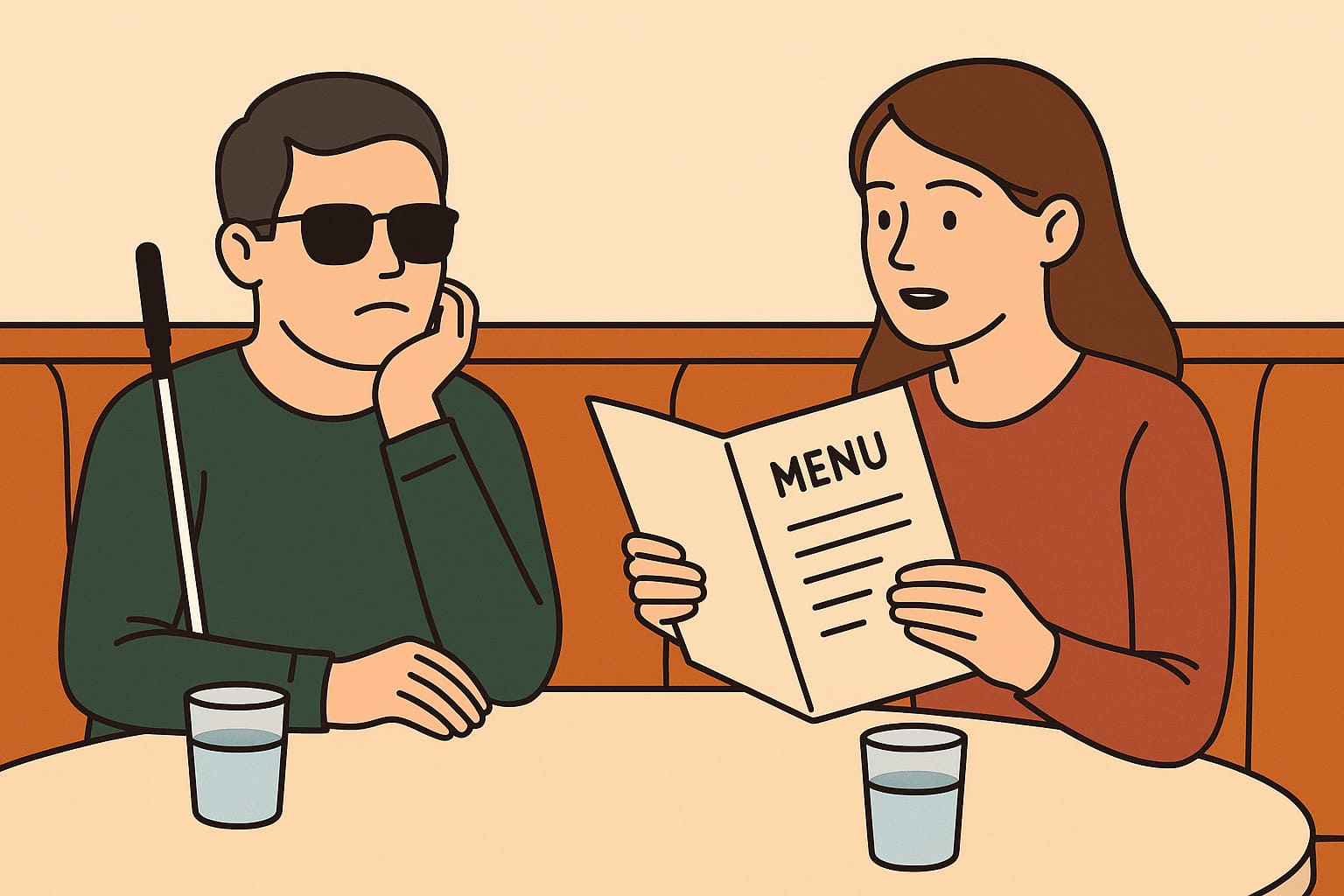
Accessibility isn’t just about convenience; it is about independence and inclusion in day-to-day life. Imagine trying to cross a busy intersection without being able to see the traffic lights or dine in a restaurant where the only way to access the menu is to ask someone else to read it aloud for you. This is the reality for the 253 million people who live with low vision, including 36 million who are blind.
Our Modern Reliance on Visual, Digital Spaces
These days, everything is shifting to being primarily online. As this new digital world is just emerging, online accessibility should be prioritized. However, about 96.3% of homepages have detectable accessibility errors, with an average of 50 issues per page. Missing alternative text, unlabeled buttons, and poor color contrast may seem like small oversights for sighted people. Yet, for someone with a vision impairment, these are barriers that block access to education, work, healthcare, and community life. Many of these failures could be avoided if accessibility in design were considered from the beginning.
This has real consequences. One blind user, interviewed by Wired, described how 90% of their time online involves navigating usability breakdowns, from meaningless “click here” links to forms that cannot be submitted with a screen reader. These represent systematic exclusion from digital society and are therefore an impediment to participating in a “normal” life in 2025.

Credit: International Agency for the Prevention of Blindness via PubMed Central
A Gimmick Becomes an Accessibility Aid
Technology can also be a part of the solution. New products are reshaping what independence can look like. For example, Ray-Ban Meta smart glasses combine a camera, voice control, and Meta’s AI. These glasses allow users to ask questions like “What’s in front of me?” and receive real-time descriptions. Even though the Ray-Bans are not made specifically for visually impaired users, they can benefit by gaining the ability to live a daily life less dependent on others.
There are also innovative tools designed specifically with blind users in mind. The app Be My Eyes began as a way to connect blind users with sighted volunteers via video call. Today, it includes a Virtual Volunteer powered by GPT-4, which can describe images and answer the needed questions. Common uses include very everyday activities, like reading food expiry dates or helping identify street signs. Similarly, OrCam MyEye is a wearable device that clips onto glasses and can read printed text, recognize faces, and identify products in real time.
An Unequal Financial Burden Based on Ability
These innovations point to exciting progress, but expecting blind people to purchase new gadgets to navigate a world that should already be accessible is not equitable treatment. Laws such as the Americans with Disabilities Act require accessible websites and services, yet lawsuits over violations continue to rise. The number surpassed 4,500 cases in the U.S. in 2023 because of software installed just to comply with these policies.
This is not a niche issue; accessibility cannot be treated as a luxury or an optional feature. When design is inclusive, everyone benefits: curb cuts help parents with strollers as much as wheelchair users, and well-structured websites improve usability for all. Blind and low-vision people are not asking for special treatment. They are asking to participate in the same digital world the rest of us often take for granted.


We offer practical DEI programs tailored to help you apply inclusive practices effectively in everyday business. Discover our workshops to see what’s available.