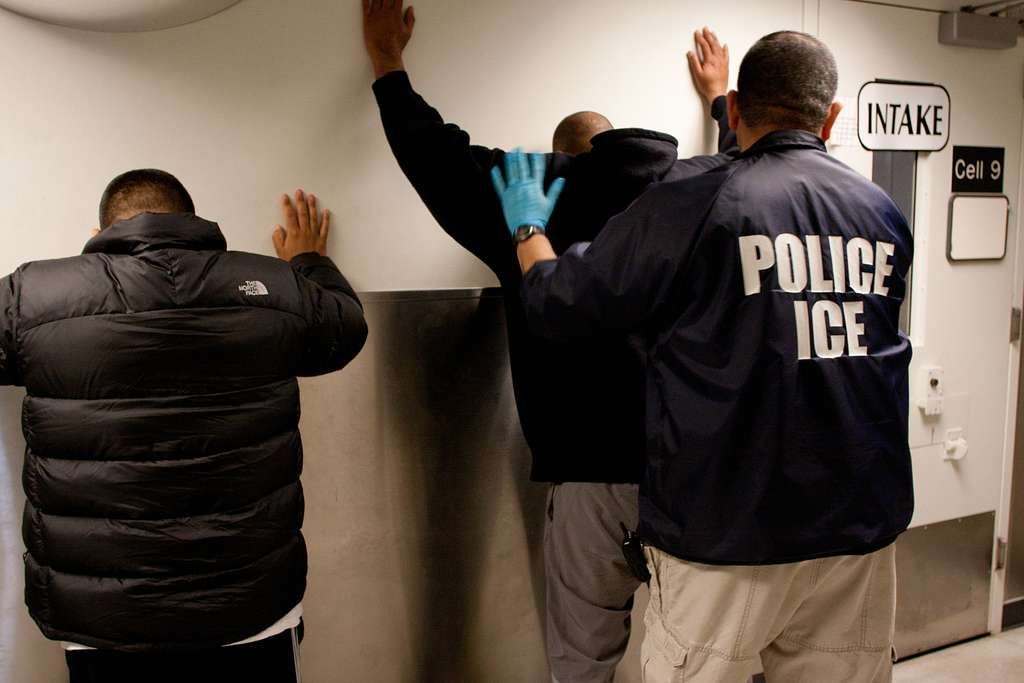
Rising hostility toward immigrants has become a defining trend across many countries, fueled more by fear and misinformation than by any factual understanding of migration. In the U.S., immigration enforcement relies on Immigration and Customs Enforcement (ICE), which conducts workplace and community raids to detain people suspected of immigration violations. These raids involve agents entering homes, job sites, and public spaces, often violently and without warning, and rely on profiling based on appearance, language ability, or perceived ethnicity. This has led to the detention of undocumented and documented immigrants, as well as American citizens who “look foreign.”
Bias: Harmful at Best, Deadly at Worst
These operations reinforce narratives that portray immigrants as threats or criminals, creating an atmosphere where discrimination is justified. They break up families, separating children from their parents, sometimes never to be reunited. Yet, there is no evidence of any meaningful correlation between immigration and crime. These crime-related fears stem from bias, stereotypes, and political rhetoric rather than reality. In truth, immigrants commit crimes at lower rates than native born citizens, with crime tending to decline in cities with increasing immigrant populations.

Global net migration in 2020
Credit: Esteban Ortiz-Ospina, Max Roser, Hannah Ritchie, Fiona Spooner, and Marcel Gerber, CC BY-SA 3.0, via Wikimedia Commons
Anti-Immigration is a Global Trend. America Is Not Exceptional.
This rhetoric isn’t just limited to the U.S. In Japan, a populist surge has intensified anti-foreigner sentiment despite the country facing severe labor shortages, one of the world’s fastest-aging populations, and falling birth rates. Similar fears appear in Europe, as German Chancellor Friedrich Merz has publicly called for large-scale deportations to correct migration “mistakes.” Such inaccurate, damaging, and misleading behaviors are doing nothing but encouraging fear, xenophobia, and violence toward marginalized communities.
People Have Always Moved, Built, Created, Thrived.
Immigrants play an essential role in strengthening economies and stabilizing societies. Despite claims that immigrants strain public resources, they actually contribute more in taxes than they receive. Immigrants expand the labor force at a time when many countries struggle to fill jobs, increasing productivity, contributing to GDP growth, and bringing entrepreneurial energy to industries where native workers are often unable and unwilling to meet demand. More than half of U.S. startups valued at over $1 billion were founded by immigrants, illustrating their contribution to economic vitality. Far from being an economic burden, immigrants are central to national competitiveness and long-term prosperity.
Hostile attitudes and discrimination make integration difficult, but immigration enriches societies by introducing new languages, traditions, and perspectives that expand cultural understanding and strengthen community life. Research shows that diverse societies are more creative, adaptable, and innovative than homogeneous ones. Simply being exposed to different viewpoints encourages greater problem-solving and social awareness. Creating opportunity and being open to inclusion are key to successful integration.
Increasingly negative perceptions of immigrants are tragic. Immigrants are not a threat. They are human beings who bring strength, resilience, and possibility to their new communities, even when they may need some additional integration support. Human migration has irreversibly shaped the world we live in, driving global development and prosperity throughout history. It could continue contributing to the cultural and social strengths of modern nations if only we welcome them in.

Credit: Molly Adams, CC BY 2.0, via Wikimedia Commons
This article was written by a guest contributor, E. Takamura.

We support DEI through practical solutions for organizations of all sizes. Discover more on our About Us page.