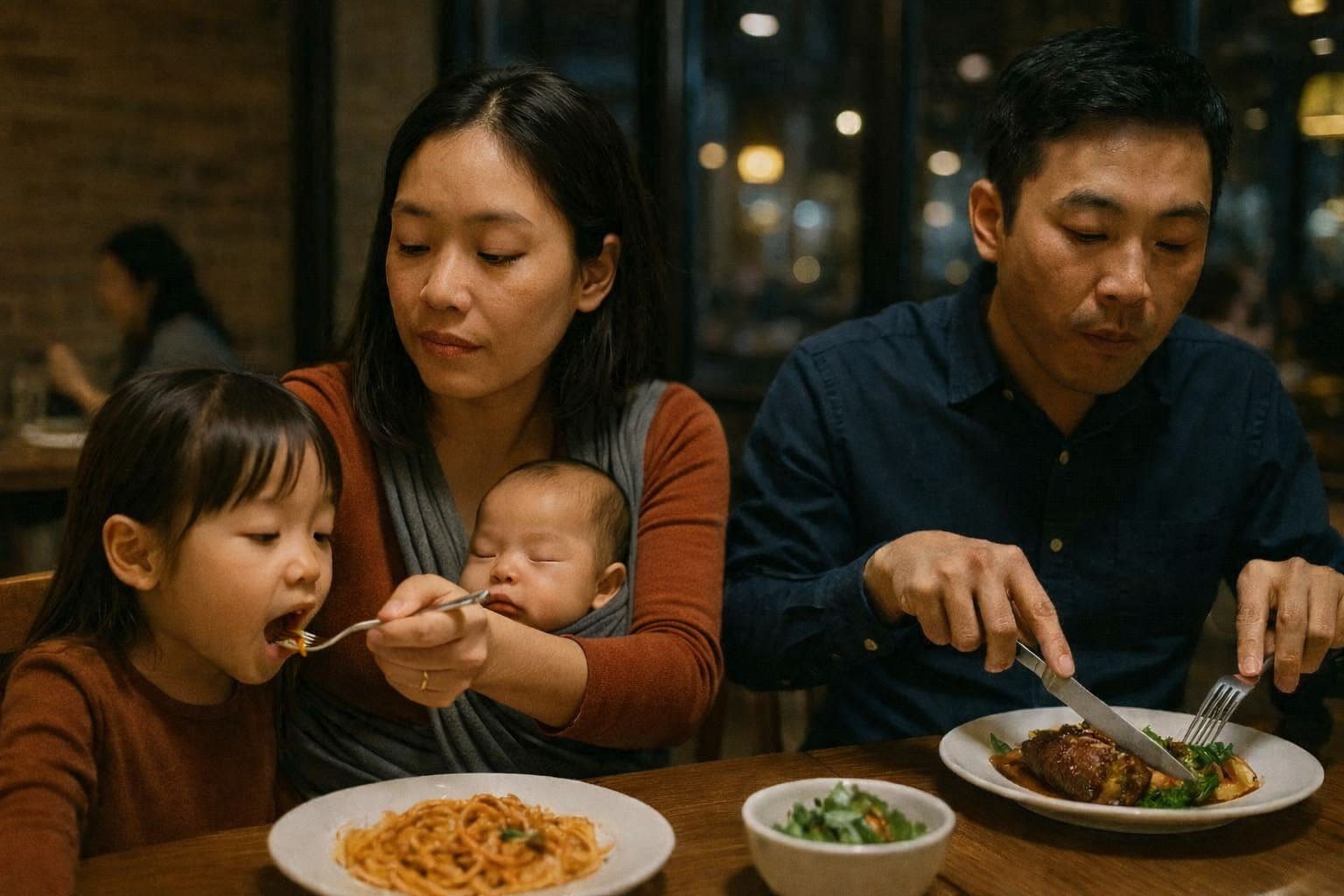
There has been a shift in who most wants to have children. According to Pew Research, among young adults without children, men are more likely to report wanting children than women. A CBC Canada study on Canadian men aged 18 to 34 found they were also likely to want more than one child, with only 7.4% wanting one kid.

Credit: Among young adults without children, men are more likely than women to say they want to be parents someday, Pew Research Center, Washington, D.C. (February 15, 2024)
Tools to Ensure Men’s Reproductive Autonomy Exist. Why Are They the Second Choice?
Women are expected to shoulder the burden of birth control and pregnancy. Author of Ejaculate Responsibly: A Whole New Way to Think About Abortion, Gabrielle Blair, believes men need to be more accountable for their fertility, as responsibility doesn’t start at birth but at ejaculation. Especially in regions that restrict bodily autonomy for pregnant people, there are largely no social consequences for the men who recklessly impregnate women, despite the fact that their sperm causes the pregnancy. There needs to be a mindset shift from “I want a child” to “I want to be a father,” which will entail being more purposeful and considerate of one’s fertility. It’s important to step into the role of a parent, not focus solely on acquiring a child.
The Choice: Be A Partner or A Second Dependent
CBC Canada reports that the men largely see having children as a positive, as something that will create no major change in their lives. As having a child inherently brings major financial, career, time, and health changes, this hints that these prospective fathers either don’t understand or don’t expect to do much caregiving. With the strong desire to become a parent, one might expect fathers to make an effort to take on an equal portion of caregiving and household labor. Yet, traditional gender roles continue pushing women to be caregivers and men to be providers. Even as fathers are increasingly taking paternity leave, for children under six, mothers are most likely to take on caregiving responsibilities. Global data reports that, each day, women spend around 2.8 more hours than men doing caregiving work, such as putting kids to bed or helping them eat.
Growing Beyond the Low Expectations of Societal Norms
Across cultures, men aren’t raised to be emotionally invested in parenting like women are, with imaginary play or toys focused on caregiving. There is the saying that “men want children like children want puppies,” which means men are there for the cute, surface-level reasons to have children and not truly committed to handling the messy parts. Without a clear and obvious emotional and physical investment in being a parent, the desire to have children becomes selfishness. This commodification of children is most obvious in the behaviors of billionaires, like Peter Thiel and Pavel Durov of Telegram, who donate their sperm in hopes of passing on their legacy without the ties of parental commitment.
Taking responsibility for one’s fertility means understanding that children are autonomous beings and are more than a legacy. It means understanding the very real risk of medical complications, denial of care, and even death for the women they ask to bear their children. Most importantly, it means showing up for fatherhood, for the benefit of your child, your partner, and yourself.


Learn from real business case samples and empower your organization with DEI strategies. Visit our About Us page to explore further.