The gender binary, the idea that there are two distinct and separate biologically determined genders, is believed by many to be an immutable fact of life. However, as acceptance and recognition of LGBT+ identities grow, it becomes more clear that the gender binary is a cultural invention, not a biological truth. For hundreds of years, Western colonial powers worked actively to suppress and eliminate gender diversity to promote assimilation and support the efforts of imperial powers. Despite this, gender identities beyond “male” and “female” have existed for all of recorded human history, such as Two-Spirit people in Native American cultures, hijra in South Asia, and muxe in Mexico, among others.
Increasing Visibility for Nonbinary Identities
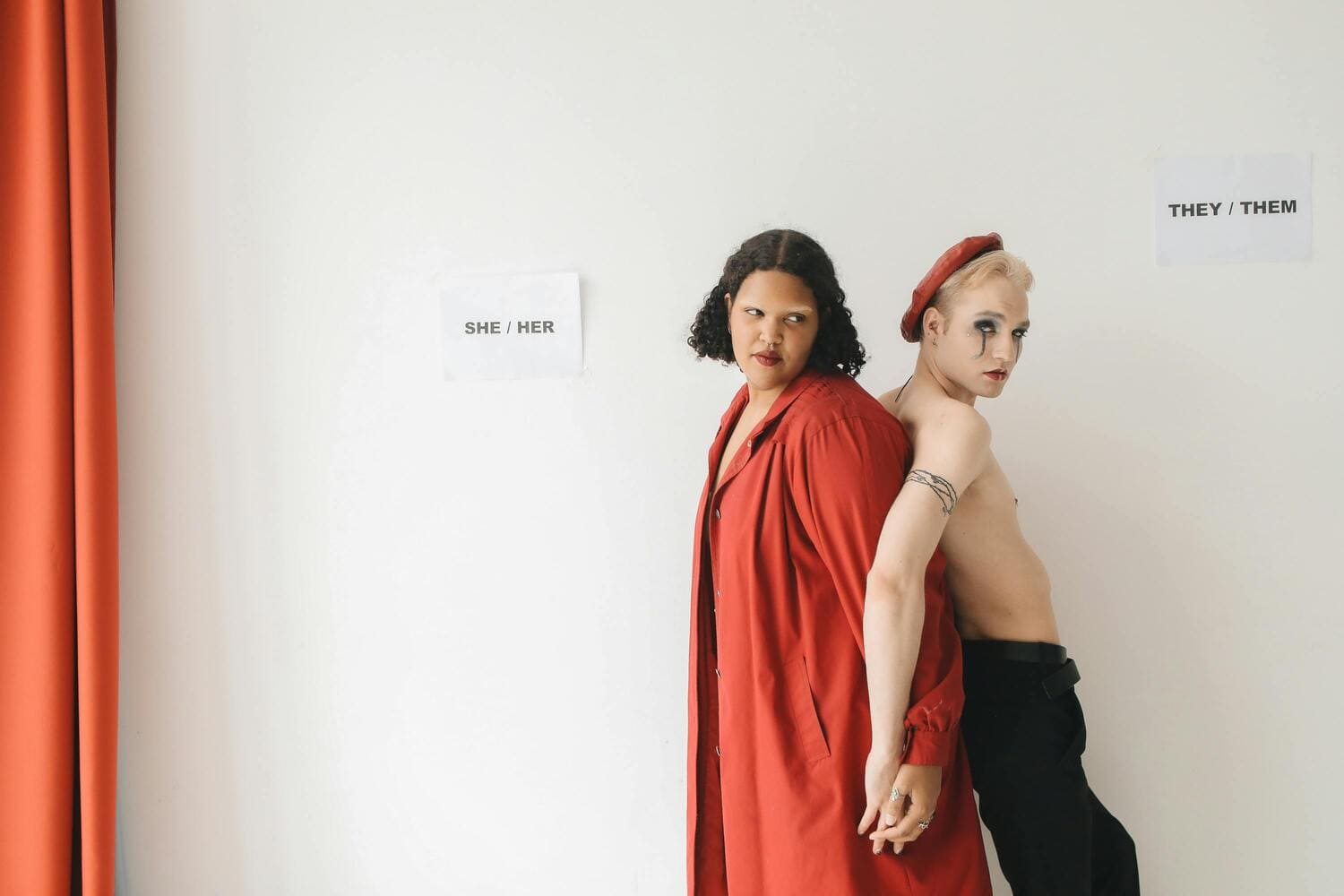
In modern times, “nonbinary” has been the term of choice, with about 1% of American adults identifying as such. Nonbinary is an umbrella term that can encompass a variety of gender identities, from those who identify as neither male nor female to those who identify as both and even those who have a “fluid” relationship to gender. In recent years, a number of celebrities have come out as nonbinary, including English singer-songwriter Sam Smith, American musician and actor Janelle Monáe, and Japanese-American singer-songwriter Hikaru Utada.

Credit: Kim Metso, CC BY-SA 4.0, via Wikimedia Commons
The Impacts of Gendered Language
For people who identify as nonbinary, the issue of personal pronouns is quite significant. In English, only the third-person pronouns (she, he, they) are gendered, meaning it generally isn’t possible for people to express their gender in their own speech. When an English speaker comes out as nonbinary (or transgender), they have no choice but to rely on the kindness of others adjusting their speech to respect the nonbinary person’s pronouns. The situation is even more complex for those who speak gendered languages like Spanish where most words are gendered. This makes inclusive language choices particularly important for everyone who wants to ensure that nonbinary people feel seen and respected.
However, even when their friends and family are fully supportive of their gender, nonbinary people are likely to experience misgendering every single day. Imagine, for a moment, that you had to ask every barista, shop clerk, and coworker not to judge you based on the way you look or talk, and make a special effort to remember how you identify. Some will agree and make that effort for you, but others will tell you no and treat you cruelly simply because they want to hurt you. If you choose not to come out, you simply accept that you will be misgendered by everyone. With this in mind, is it even a surprise that the rate of depression amongst nonbinary and transgender youths in the United States can be as high as 83%, with 29% having attempted suicide?
Be An Ally, Create Safe Spaces
Nonbinary identities are often marginalized when considering the LGBT+ community despite also suffering the same forms of discrimination as transgender and gender-nonconforming individuals both socially and in their professional lives based on the way they choose to present themselves or their choice to use the gender neutral “they” pronoun. This makes it especially important to take the time to educate yourself and recognize their existence.
To be a good ally and promote diversity, you can practice using gender-neutral language in your everyday life, such as using terms like “partner,” “spouse,” and “parent” to avoid making assumptions about people’s genders. Perhaps you can even start sharing your pronouns when meeting new people to normalize the behavior. Such small adjustments might someday influence the mindsets of those around you to create an inclusive environment that is safe for nonbinary people to be their authentic selves.


Learn from real business case samples and empower your organization with DEI strategies. Visit our About Us page to explore further.