People with significant disabilities represent about 16% of the world’s population (about 1.3 billion people). Because accessibility barriers remain, they are largely excluded from education systems, the job market, and, therefore, financial systems. Unemployment rates for people with disabilities in OECD countries are two to three times higher than for those without disabilities. In some countries, the employment gap reaches 40 percentage points. However, exclusion doesn’t begin in the labor market. Accessibility barriers block opportunities from childhood through adulthood, turning inequality into a lifelong condition.
Disabilities and Challenges in Education
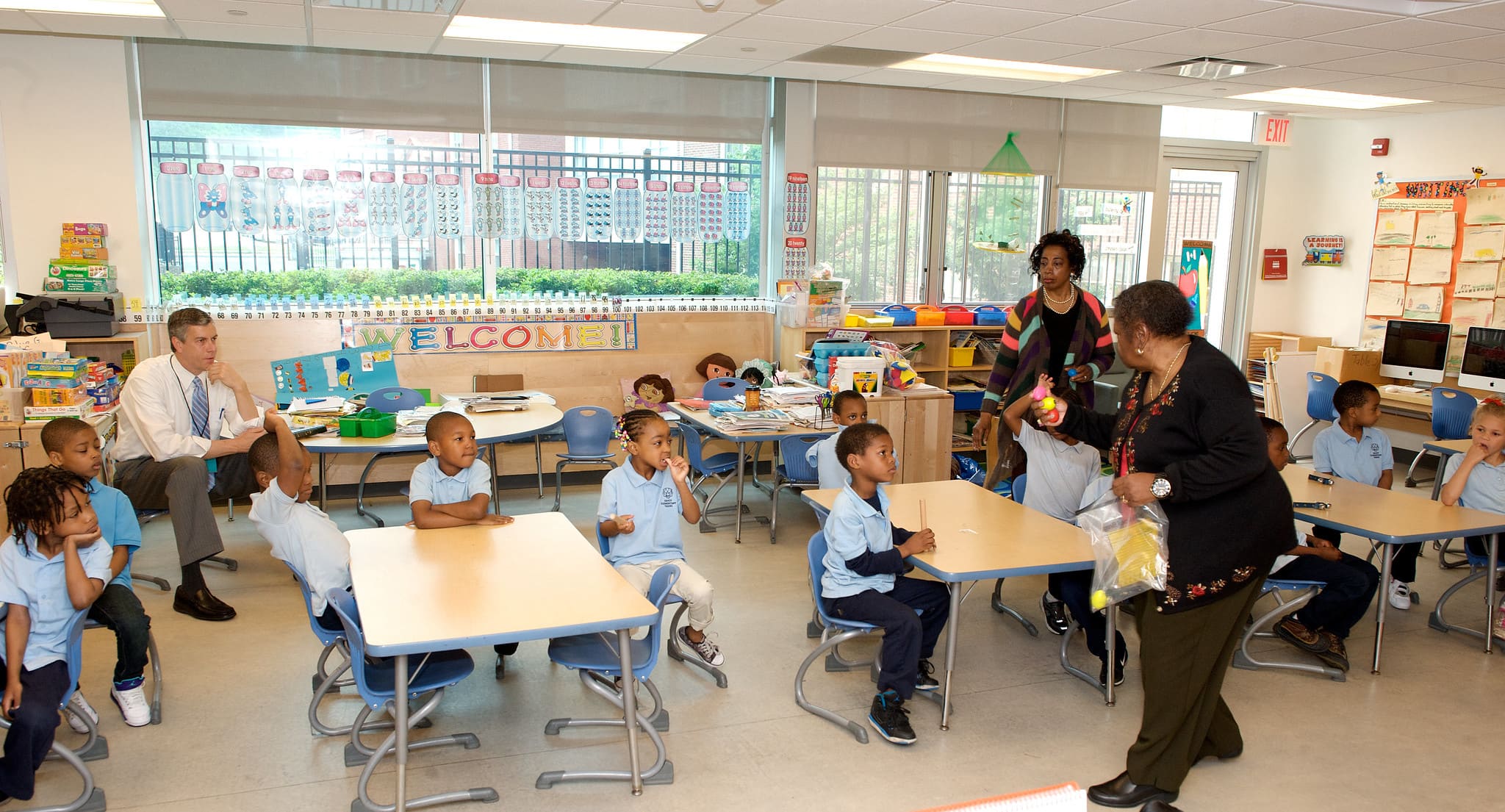
Having a disability proves to be a challenge when accessing education. About 8% of young people report having a disability. Students with disabilities are more likely to drop out because schools don’t have enough trained teachers or accessible materials. As a result, 30% of people with a disability have achieved only a low level of education, which is 10% higher than in the population without disabilities. When their education is cut short, finding stable work becomes nearly impossible, and without a steady income or benefits, people with disabilities can quickly fall through the cracks.

Image via The World Bank
Improved Access to Opportunity, Improved Outcomes
Some countries are implementing laws in an attempt to change these numbers. For example, Uganda passed its Persons with Disabilities Act in 2006, which resulted in a 56% increase in school attendance for children with disabilities. In Argentina, the Senate recently overrode President Javier Milei’s presidential veto to approve an emergency law expanding disability benefits amid rising poverty. This is crucial as around 50% of the population of Argentina works informally and therefore doesn’t even have healthcare benefits. Chile has also implemented inclusive health regulations and a 1% quota law requiring large companies to hire workers with disabilities.
Even when people with disabilities are able to earn their degrees and overcome inaccessible recruitment processes to successfully enter the labour force, they still find themselves facing further structural barriers. Many governments regulate accessibility issues, in particular those related to structural issues such as mandatory ramps and elevators. However, adapting offices and workplace technologies to meet different and differing levels of needs is left to the goodwill of employers. People with disabilities are not a homogeneous group, so companies that attempt a one-size-fits-all approach to inclusivity can still fail to achieve it. In this, being able to educate coworkers and managers seems crucial.
The Need to Build Inclusion at all Stages of Life
Breaking the “lifetime cycle” of inaccessibility for people with disabilities requires treating economic support as a right and refusing to leave people to fend for themselves in a system that keeps pushing them down. The OECD warns that poorly designed programs often create “benefit cliffs,” where recipients lose all support once they start working, discouraging employment and reinforcing insecurity. So, when governments fund disability benefits, accessible education, and inclusive workplaces, they must move carefully to ensure they are truly empowering this often marginalized and ignored population. For Latin America, with around 85 million people with disabilities facing high levels of inequality and unregulated labor, governmental support isn’t optional. It’s the only way to break the cycle of exclusion that begins in school and lasts a lifetime.

Credit: Hiki App, via Unsplash

We support DEI through practical solutions for organizations of all sizes. Discover more on our About Us page.