The educational landscape for public schools in the US has been slowly evolving, and some are questioning whether these new strategies are good or even necessary. The changes, largely pushed by Christian nationalists, focus more on anti-DEI goals and promoting Christianity than improving educational outcomes.
Christianity Wielded as A Weapon Against Diversity
The US, since its inception, has included a clause in the First Amendment that affirms “separation of church and state”, which says that the government wouldn’t get involved with religious institutions or favor any particular religion. Recently, the US public education system, which is funded by the government, has been actively blurring that line of separation.
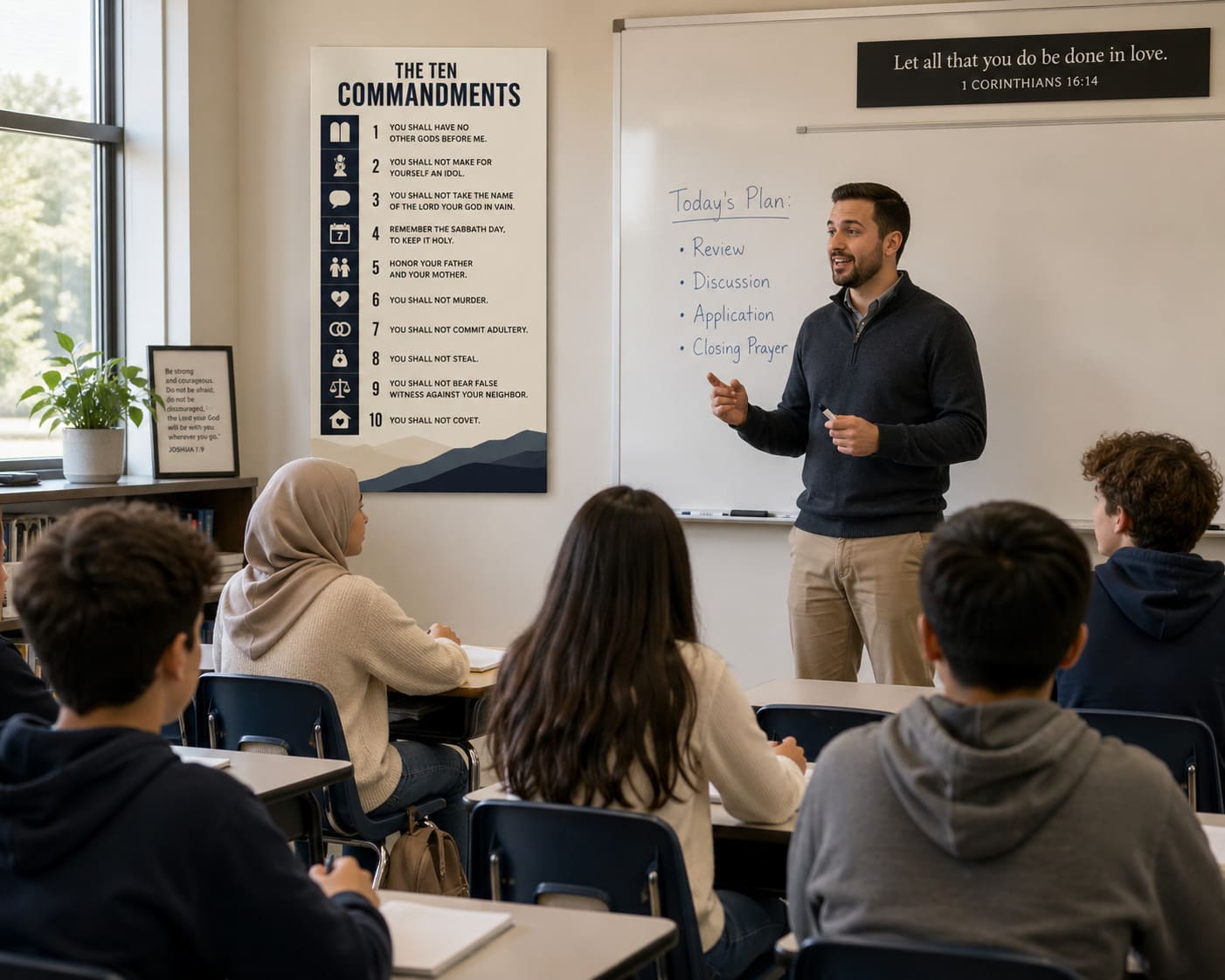
Several states have already fought to require the Ten Commandments in classrooms. Texas has introduced a new reading list that would require Bible passages to be mandatory reading for millions of public school students. The lack of diversity on the list is particularly striking, with very few Hispanic or Black authors being included. This omission is especially glaring considering the fact that Texas is majority Hispanic.
College Exams Are Not Effective. Why Add a New One?
On top of these changes, there is now a new college exam, the Classic Learning Test, that is being pushed by not only conservative states but also the Pentagon. This exam, which is intended to be used alongside the ACT® (American College Test) and SAT® (Scholastic Assessment Test) to determine college admissions, focuses on Western classical literature and religious texts. However, some argue that the test can’t accurately show college readiness due to its lack of diversity in topics.
This need to focus on one homogeneous curriculum could put students at a major disadvantage. Wars are already taught through a Western lens, such as the Vietnam War being barely covered or presenting the US as Vietnam’s savior. As Brendan Gillis, the director of teaching and learning for the American Historical Association, explained in an interview with the New York Times, it’s going to be hard for students to compete in a global economy when they haven’t learned anything about other countries, such as major competitors like China.

% of US adults who identify as Christian
Credit: Decline of Christianity in the U.S. Has Slowed, May Have Leveled Off, Pew Research Center, Washington, D.C. (February 14, 2025)
A Strong Global Society Requires Open-mindedness and Curiosity. These Changes Squash Them.
When we live in a world that is becoming more and more globalized and connected, a factual understanding of history and the diverse perspectives on it will become critical to foster understanding not only in the classroom but also in the workplace. Exposure to diversity and the world outside your own fosters innovation and creates teams capable of earning higher revenues in more globalized settings.
Changes like these in education only set up future generations for failure and undo the progress made to shrink gaps in homogeneous fields. The STEM gap between boys and girls had almost closed but opened up again after COVID. This gap has only grown because US education hasn’t leaned into diversity but has instead pulled back, cutting over 400 grants for promoting diversity and inclusion in STEM. Without the representation for students, they may not realize the potential industries they could be a part of.
When workforces understand global competitors and are equipped to thrive in diverse settings, innovation grows. It pops the bubble of uniform ideas and allows future generations to be adaptable in today’s more interconnected world. Moving towards a more prepared future workforce all starts with a more diverse education.


If you are interested in diversity after reading this article, our program may be of use to you. Find more details here!